Student Nurse on Placement: What You Need to Know
Hear student nurse Helen's hints and tips to help you prepare for clinical placements.
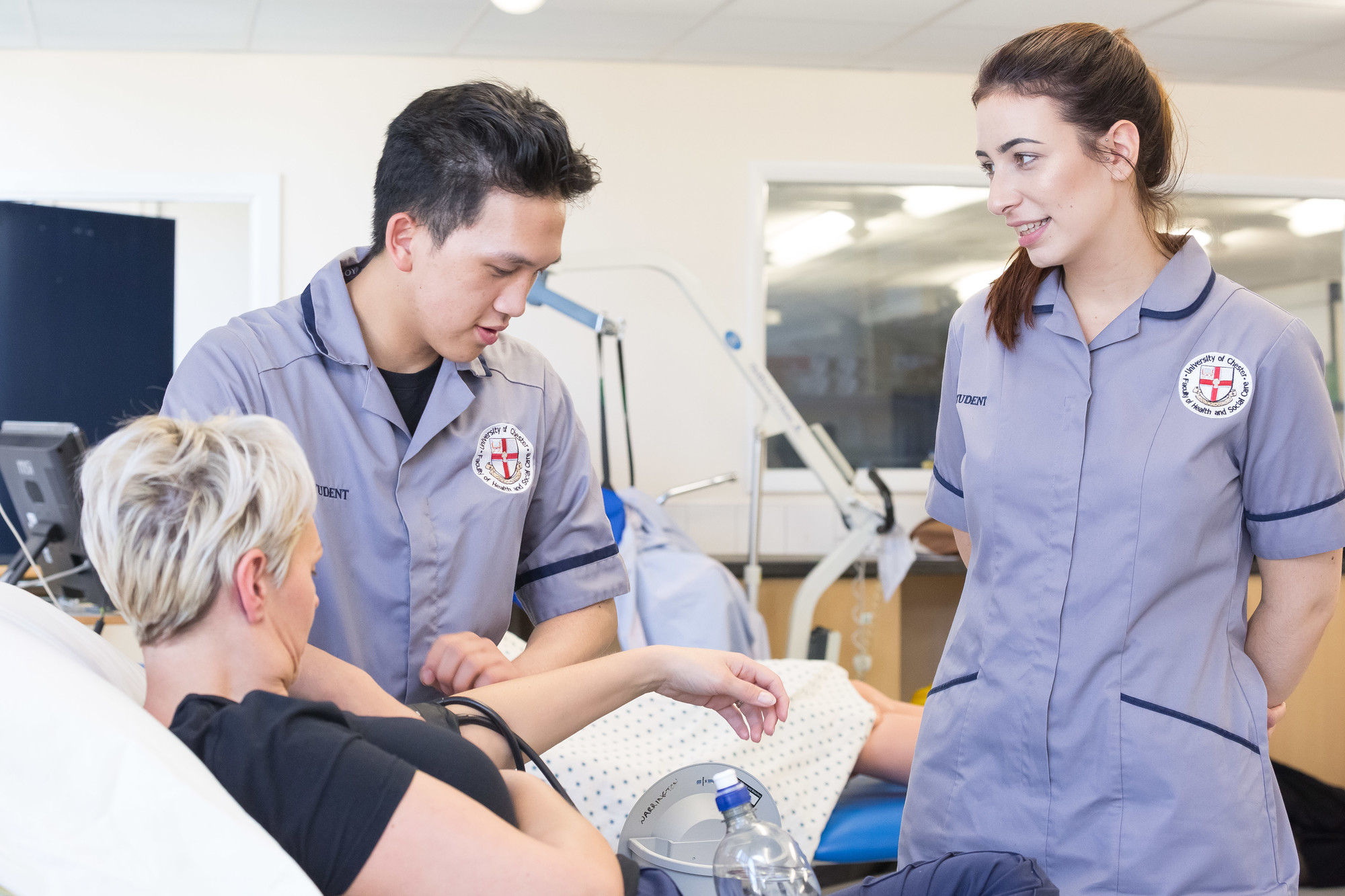
Student Nurse on Placement: What You Need to Know
My name is Helen and I am currently on my 2nd year of the BN Adult Nursing degree, based at the Marriss House campus of the University of Chester. I have experienced a lot of firsts during my training so far, and the uncertainty of what to expect. The following are hints and tips for placements, from what to do to prepare and what the expectations are once there.
One of the most exciting things about being a student nurse is the clinical placements – the anticipation while waiting for your first placement allocation, then comparing placements. This is the time that you get to put theory into practice, but it can also be daunting, especially if you do not have a background in healthcare.
Contacting Your Placement
Once the allocations are made, the first job you need to undertake is to contact your placement to introduce yourself, and to find out your assessor’s details and the placement hours. It is always important to find out if there is anything they need from you before you arrive, or anything you can do to prepare for your placement. If you have a Reasonable Adjustment Plan (RAP) or an inclusion plan, ensure that it is uploaded to the Practice Assessment Record & Evaluation (PARE) document in the additional documents section, but do not assume that they will have seen this before you start. Before you start is the best time to discuss any limitations that you might have and how you can adjust your practice to accommodate this.
Plan Your Journey
If you are driving, investigate the parking situation and whether it is free or paid parking. What are the bus routes and times to ensure you reach your placement in plenty of time. If on a hospital placement, parking can be both limited and charged; work out if there is anyone who lives close to you and is willing to car share.
Helpful Tips While on Placement
- Keep a journal; it doesn’t have to be in-depth, but it will be useful when completing your proficiencies and episodes of care. These are vital to complete each year and progress smoothly to the next year. It is also a helpful practice to continue once qualified to produce the reflections required for your revalidation every three years.
- Make the most of spoke opportunities. These are where you get to spend a day or two somewhere other than your designated placement area. It does need to be connected to the specialty of your placement, but it is a great opportunity to expand your knowledge of that specialty and experience working within the wider reaches of the multidisciplinary team (MDT). Some placements will have connections and can arrange these spoke opportunities for you; however, a lot of the time, these placements need to be sorted out personally.
- Keep a clean and tidy appearance. Not only is this part of your professional values, but you are also representing yourself and the University. Keep in mind that these placements could eventually be the place where you work when qualified.
- From the moment you step foot on the ward, you have a responsibility to be an advocate. You are a fresh set of eyes, and as much as we like to think that as nurses we will always work to an exceptional standard, sometimes bad habits and practices can creep in. We have a responsibility to challenge these practices in a way that maintains professionalism. What this means to you is knowing who to escalate your concerns to, whether it is the Practice Education Facilitator (PEF) within the setting if you feel comfortable doing so, or to the University team.
- Be proactive and enthusiastic. Always remember that even the most basic tasks are essential while providing holistic care to our patients, and they all form part of our future job remits. Some of the best connections are built with patients while changing patient beds or cleaning their tray area. Nursing is more than medication rounds and computer work.
- Know your boundaries going in; what clinical skills you are or are not allowed to practice. Different clinical trusts have different guidance for this, and it is important to know this before starting your placement to ensure that your journey to becoming a nurse does not end before you have qualified. If your assessor offers you the opportunity to complete a task outside of these guidelines, have the confidence to say, “This isn’t something we are allowed to carry out.”
- Remember that as a student, we are not expected to have all the skills or knowledge yet. Ask questions and do not be afraid to say, “I’ve not done this before, can you talk me through it, please?” or “Can you show me how to do this, please?”
- Keep up to date with your PAR documents; ensure that any sections you need to fill in are done promptly, so that your assessor can complete their sections easily.
- For medications management, plan ahead. From the moment you start on a placement, gauge whether achieving medication management is possible in that particular area; assess which patient will be best to complete this work on, then work with your assessor to complete this. Medications Management only has to be completed once per academic year; however, do not assume that you will be able to complete this during future placements, as you may end up on a clinic or community placement later in the year.
- Always go in with an open mind. Even if you have worked in an area as a support worker, working within a nursing role is very different.
And Finally…
Make the most of every opportunity! Enjoy being able to put theory into practice and meeting the nurses who will help inspire you – through their practice – into the exceptional nurses you will become in the future!