Faculty Personal Statement Guidance
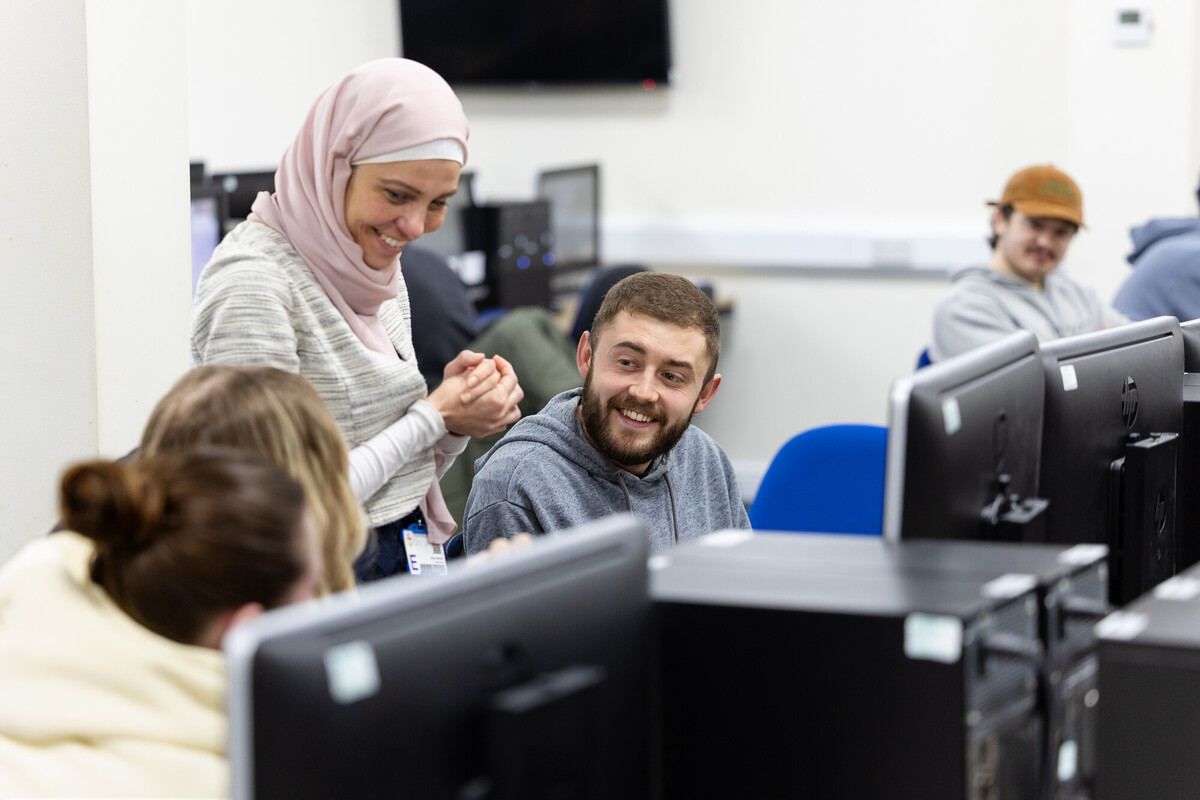
Your personal statement defines your future choices, outlines your aspirations, and allows you to make an impression to the people who will be teaching you at university.
With this context in mind, our academics and outreach teams have put together subject-specific guidance for you as you respond to the three questions from UCAS.
School of Education
How should I approach the UCAS application questions, and what should I include?
The UCAS personal statement is structured around three questions, giving you opportunities to explain why you want to study Early Childhood and Primary Education in particular as a degree, how your studies have prepared you, and what you have done outside formal education that could support your application.
Use your answers to demonstrate your curiosity about children, learning and education, your ability to think critically about different perspectives, and your motivation to explore these areas at university.
Why do you want to study Early Childhood and Primary Education?
Use this section to explain what genuinely interests you about children, learning and education. You could discuss:
- A specific experience that sparked your interest in education
- How and why children learn and develop in different ways, with how this inspires you
- Children's social, emotional, cognitive or physical development, and how you would want to learn more about this at university
- Inclusion, Special Educational Needs and Disabilities (SEND), or different learning needs
- The relationship between families, communities and education, with how this impacts the wider world
- An educational issue, policy or debate that interests you and why
- Inequality and access to education, the issues around this and what you think about this topic
- A book, article, podcast, documentary or news story that developed your thinking and why this can impact education
- Your future academic or career interests and how university will prepare you for this
Try to go beyond simply stating that you enjoy working with children or want to work in education. Explain what specifically interests you and why.
For example, observing children learn through play in a school work experience or home setting may have made you curious about how play supports social or cognitive development. A discussion about SEND with a family member or teacher could have encouraged you to explore inclusive education, while a news story about educational inequality might have made you question how children's opportunities are shaped by their circumstances.
The key to this first question is to be specific and show your curiosity about education. Explain what sparked your interest, what you learned, how it changed or challenged your thinking, and what you would like to understand further at university.
How have your qualifications and studies prepared you?
For this question, think about the knowledge and transferable skills you have developed through school, college or other formal study, such as:
- Research and critical thinking
- Essay writing and constructing arguments
- Analysing evidence and different perspectives
- Understanding human behaviour and development
- Interpreting information or data
- Presentations and communication
- Independent study
- Group work and collaboration
- Problem-solving
- Reflection
- Organisation and time management
Rather than listing your subjects or grades, explain what you learned and how it has prepared you to study Education at degree level. For example, Psychology may have introduced you to child development or theories of behaviour while Sociology could encourage you to examine inequality, family life or social structures.
You could also reflect on your own experience of education. Perhaps a particular teaching approach helped you learn differently, a project made you question how knowledge is presented, or studying alongside people with different needs made you more aware that learning is not the same for everyone.
What else have you done to prepare outside of formal education, and why are these experiences useful?
There are many things that could have supported you in developing relevant experience outside your studies. These could include:
- Volunteering or working in a school, nursery or early years setting- how has this given you insight into the wider impact of education on our society?
- Supporting children or young people- have you been inspired by this role or experience to pursue studies in this field?
- Tutoring or helping someone with their learning- what insight has this given you into education?
- Youth groups, holiday clubs or community activities- did this teach you about teamwork and the alternative settings to a classroom that people can teach children?
- Sports coaching, music, drama or other activities- what qualities have these activities equipped you with? How do they apply to the degree you are applying for?
- Volunteering with charities or community organisations- how does giving back to communities relate to the study of education?
- Reading or following current education issues- have there been any political movements or changes that you find interesting in determining the lives of young people? An example might be the social media ban, what do you think about this?
- Part-time work that could have developed communication, teamwork or responsibility
- Hobbies, leadership roles or extracurricular activities that developed relevant qualities
You do not need formal experience in a school or nursery. Think about the life and personal experiences that have shaped who you are today, including challenges you faced, responsibilities or experiences you had engaging with people from different backgrounds. These can demonstrate qualities such as empathy, resilience, independence, adaptability, curiosity and communication.
To push it a bit forward, you could then explain what you would like to understand in greater depth at university, why it interests you, and how developing this knowledge could support your future career goals.
While this degree does not automatically qualify you as a teacher. If teaching is your goal, you can explain how studying education and childhood could provide a foundation for later teacher training. You may also be interested in careers involving early years, children and families, community organisations, educational support, policy, charities or further research.
Try not to simply list everything you have done. Focus on a handful of meaningful examples and explain what you learned, how the experience developed your interests or skills, how it has prepared you for studying Education at university, and what you would like to explore next.
Please note: These recommendations are intended to support students in approaching the UCAS application questions. They are for guidance only and should not be regarded as a prescribed format or model answer.
How should I approach the UCAS application questions, and what should I include?
The UCAS personal statement is structured around three questions, giving you opportunities to explain why you want to study Primary or Early Years Teaching and become a teacher, how your studies have prepared you, and what you have done outside formal education that could support your application.
Our Primary and Early Years Education degrees with Qualified Teacher Status (QTS) combines academic study with professional practice to prepare you for a career as a professional educator in Primary or Early Years School Settings. Therefore, use your answers to demonstrate your motivation to teach, your understanding of working with young children, your enthusiasm for learning, and the personal qualities you believe are needed to develop as a reflective and inclusive teacher.
The following suggestions may help you when preparing your application.
Why do you want to study Primary Education with QTS?
Use this section to explain why you want to become a primary teacher and what has inspired that ambition. You could discuss:
- An experience that first sparked your interest in teaching
- Why working with children appeals to you
- A teacher, placement or experience that influenced how you think about education
- What difference you believe a teacher can make to children's learning and development
- A particular curriculum subject or aspect of education that interests you
- Education/ Teaching related issues such as inclusion, Special Education Needs and Disabilities (SEND), safeguarding, children's wellbeing or educational inequality
- A book, article, podcast or educational debate that has developed your thinking
- The kind of teacher you hope to become and your future ambitions
Try to go beyond simply stating that you enjoy working or engaging with young people. Give specific examples and explain why teaching matters to you and what you understand about the role of a teacher. You could also reflect on what you have observed about teaching and learning, including how teachers support different needs, encourage participation, and respond to the challenges they may face in the classroom.
The key to this question is to be specific and reflective. Show what sparked your motivation, what you learned from it and how it shaped your decision to work towards becoming a teacher.
How have your qualifications and studies prepared you?
Think about the knowledge and transferable skills you have developed through school, college or other formal study. These might include:
- Communication and Presentation Skills
- Planning and organising
- Working independently and under stress
- Teamwork and collaboration
- Creativity and problem-solving
- Research and critical thinking
- Giving and responding to feedback
- Reflecting on your own learning
- Subject knowledge in areas such as English, mathematics and science
- Patience, perseverance and adaptability
Rather than listing your subjects or grades, choose a few examples and explain how they have prepared you for university study and teacher training.
For example, giving presentations may have developed your confidence explaining ideas clearly, group projects could demonstrate collaboration and organization, studying mathematics or science may have developed your logical thinking and problem-solving.
You can also reflect on your own experience as a learner. Was there a teaching approach that helped you understand something difficult? Did a particular subject inspire you because of how it was taught? Consider what this taught you about how children learn and how teachers can encourage curiosity, confidence and participation.
What else have you done to prepare outside of formal education, and why are these experiences useful?
Relevant experience can take many forms. You could discuss:
- Any teaching experience- this could be teaching a family member or as a tutor in school. What about it was inspiring/challenging to you? How do you think this experience will inform your degree?
- Volunteering in a primary school, nursery or any formal and informal educational setting- how did this experience motivate you to carry on developing in this field through your university studies?
- Working at holiday clubs, youth groups or children's activities- what did this involve? Did you have to speak with parents as well as the children? What was rewarding and how do you think it serves as a basis for your university studies?
- Coaching sports, music, drama or other activities- has this taught you discipline? Teamwork? Creativity? Why do you think that’s important in the role of a teacher?
- Part-time work- did this involve communication, working under pressure or taking on responsibility? Why would this be beneficial experience to have in preparation for your studies?
- Community or charity activities- how do you think giving back to wider communities reflects the role of a teacher? Did you have to coordinate with a large team to fundraise? What was something you were proud of achieving?
- Hobbies or skills you could contribute to a school community- would you want to run an after-school club or incorporate a specific skill you have into your teaching practice? Why is that unique?
- Reading or following current issues in education- have there been any political movements or changes that you find interesting in determining the lives of young people? An example might be the social media ban, what do you think about this?
If you have spent time in school, focus less on how many hours you have completed and more on what you learned. Try to think about what you observed, for instance, how did teachers explain ideas? How were different needs supported? How did staff build positive relationships, manage behaviour or encourage participation?
You could then explain how the experience developed your understanding of the profession and qualities such as communication, patience, empathy, adaptability, resilience, responsibility and teamwork.
A useful way to strengthen your answer is to connect your experiences with what you would like to develop further through a teaching degree. Perhaps supporting a child with additional needs sparked your interest in inclusive practice or SEND, observing different teaching approaches encouraged you to explore how teachers plan engaging lessons. You could then explain what you hope to learn at university and through placement, what kind of contribution you hope to make to future educational landscape.
Try not to simply list everything you have done. Focus on a handful of meaningful examples and explain what you learned, which qualities or skills you developed, how the experience strengthened your understanding of teaching, and how it has prepared you to become a future educator.
Please note: These recommendations are intended to support students in approaching the UCAS application questions. They are for guidance only and should not be regarded as a prescribed format or model answer.
School of Creative Industries
How should I approach the UCAS application questions, and what should I include?
The UCAS personal statement is structured around three questions, giving you opportunities to explain why you want to study Acting, how your studies have prepared you, and what you have done outside formal education that could support your application.
Acting, as a subject area, combines creative practice with critical and reflective study. It involves interpreting texts and characters, developing vocal and physical techniques, collaborating with others, responding to direction, and making deliberate performance choices for different audiences and settings.
Therefore, we recommend you utilising your answers to demonstrate your creativity and curiosity about performance, your willingness to experiment and develop, and your interest in exploring acting as a craft for stage, screen and other performance contexts.
Why do you want to study Acting?
Think about what first sparked your interest in acting and what you would like to explore further. You could discuss:
- A performance, actor, director or theatre company that influenced you
- A play, film or production that changed how you think about acting
- Acting for stage or screen
- Voice, movement and physical performance
- Improvisation or devised performance
- Storytelling and communicating with audiences
- Different acting techniques or practitioners
- Representation, identity or social issues explored through performance
- Your future creative or professional interests
Try to think about what specifically interests you about performance. For example, watching a particular performance might have made you notice how an actor used voice, movement, timing or stillness to develop a character. Performing a role yourself might have encouraged you to question how different interpretations of the same text can influence an audience.
The key is to be specific and reflective. Explain what you noticed or discovered, how it influenced your understanding of acting and what you would like to explore further at university.
How have your qualifications and studies helped you to prepare?
Relevant preparation can come from Drama and Theatre, performing arts as well as many other subjects. Think about the knowledge and transferable skills you have developed, such as:
- Character and text analysis
- Voice and movement
- Improvisation and devising
- Rehearsal and performance techniques
- Research and critical thinking
- Creativity and experimentation
- Collaboration and ensemble work
- Responding to direction and feedback
- Reflecting on and improving your performance
- Communication and presentation
- Organisation, discipline and time management
Rather than simply listing productions, roles or qualifications, choose a few examples and explain what you learned through the process and how this has prepared you for studying Acting at university. For example, Drama may have developed your rehearsal, performance and characterisation skills, Music may develop physical or vocal awareness, rhythm, discipline and confidence while Film Studies could also help you consider performance for camera.
If you discuss a past production, focus on how you developed your performance. Perhaps you experimented with different approaches to a character, adapted your choices after receiving direction, overcame difficulty during rehearsals, or learned how your individual performance contributed to an ensemble.
What else have you done to prepare outside of formal education, and why are these experiences useful?
There are many ways to develop as an actor beyond formal study. These could include:
- School, community or amateur theatre productions- how has being involved in these activities strengthened your performance skills? How do you want to develop these skills at university?
- Youth theatre or acting groups- has this taught you teamwork, preparation, resilience? Why would that be useful at university?
- Acting workshops or short courses- was there something surprising you learned as part of this experience? How do you think this will serve as a basis for your studies?
- Watching live theatre and screen performances- was there a specific performance you loved? Why? Do you want to replicate any part of it?
- Practising monologues or creating self-tapes- how has this allowed you to critically evaluate yourself?
- Short films or other screen projects- what was it like working with non-actors in a project? Do you think that’s a useful experience to have when thinking about university?
- Improvisation, devising, directing or scriptwriting- how have you engaged in the different aspects of theatre? Do you think it’s important for an actor to have an understanding of this?
- Dance, singing, music or physical activities- how do you think this will come into play with acting? What extra skill makes you unique?
- Volunteering or community performance- how do you think civic responsibility is related to your degree and are you already engaged in the pursuit of giving back to others? Why is that important?
- Part-time work, hobbies or other responsibilities- any relevant work experience is great to mention in this section, as well as how this has motivated you to study Acting.
The key to this question is to explain how you have engaged with performance and what you have learned from those experiences. For example, taking part in a theatre production could teach you about collaboration and rehearsal discipline while practising a monologue could make you more aware of how your voice, body and interpretation communicate meaning.
A useful way to take your answer further is to connect what you have already done with what you would like to develop through an Acting degree. Perhaps performing on stage has encouraged you to explore acting for camera, working on a challenging character made you interested in text analysis, or a workshop sparked your interest in developing your voice and movement.
You could then explain how developing these areas could help you grow as the kind of creative professional you would like to become and support your future personal and professional goals.
Try not to simply list everything you have performed in or done. Focus on a handful of meaningful examples and explain what you learned, how the experience developed your creative or performance skills, how it has prepared you for studying Acting at university, and what you would like to develop next.
Please note: These recommendations are intended to support students in approaching the UCAS personal statement questions. They are for guidance only and should not be regarded as a prescribed format or model answer.
Applicants to BA Acting may also be required to complete an audition as part of the selection process. This guidance is intended only for the UCAS personal statement and should not be used as guidance for preparing for an audition or any other additional selection activity. Please refer to the relevant course and audition guidance pages for the most accurate and up-to-date information.
How should I approach the UCAS application questions, and what should I include?
The UCAS personal statement is now structured around three questions, giving you opportunities to explain why you want to study Creative Writing, how your studies have prepared you, and what you have done outside formal education that could support your application.
Creative Writing involves experimenting with language, developing ideas, drafting and redrafting, responding to feedback, and making deliberate choices about how you communicate with different audiences. Use your answers to demonstrate your creativity and curiosity about writing and using texts to share and explore ideas with different audiences.
Why do you want to study Creative Writing?
Think about what first encouraged you to write creatively. You might then discuss some of the following:
- Your fiction, poetry, drama or scriptwriting
- Short stories, flash fiction or longer-form creative prose
- Characters: the people you write about
- Settings or world-building
- Plot, structure
- Writing for stage, screen, audio or other media
- Genre (e.g. comic, ghost, horror, mystery, thriller, Young Adult) or your experiments with different forms
- How you create atmosphere, emotion or tension
- Representation, identity or experiences you are interested in exploring through writing
- Your future interests in writing, publishing, teaching/tutoring or other creative careers (there are many).
- Perhaps think about what specifically fascinates you about the process of creating a piece of writing. For example, experimenting with dialogue could have made you see how you can change different characters, or writing a short poem could have encouraged you to think carefully about rhythm and imagery.
You could perhaps also think about how a text, television drama or film you love has influenced your own creative writing. What was its influence?
How have your qualifications and studies helped you to prepare?
Relevant skills and knowledge can come from many subjects. Think about the knowledge and transferable skills you have developed through school, college or other formal study, such as:
- Creative and imaginative thinking
- Close reading and textual analysis
- Developing and communicating ideas
- Understanding language, form and structure
- Researching subjects or settings
- Drafting, editing and proofreading
- Giving and responding to constructive feedback
- Independent project work
- Presentations and communication
- Working collaboratively
- Organisation and meeting deadlines
- Reflecting on and improving your work
Rather than simply listing your grades, choose specific examples and explain what you learned and how it could help you develop as a writer. For example, English Literature or English Language may have encouraged you to examine how writers use voice, structure or imagery, Drama may have introduced you to dialogue, character and writing for performance, while Art & Design or Film Studies may have developed your understanding of visual storytelling.
You could also discuss a piece of coursework or creative project that required you to develop an idea. What changed during the writing process and what did you learn from it?
What else have you done to prepare outside of formal education, and why are these experiences useful?
Creative Writing can be developed in many ways beyond formal study. Your examples could include:
- Writing stories, poetry, scripts or other creative work independently- what have you learned about yourself during this process? How do you think university might build on this experience?
- Writing blogs, reviews, fan fiction or online content- do you change your writing style for different audiences? Why do you think that might be an important skill?
- Entering writing competitions- have you achieved any awards for your creative skills? Why was this important to you in particular?
- Contributing to a school, college or community publication- did you work with a team of people to do this? How do you think that factors in the creative process?
- Joining a writing group or workshop- how do you think feedback has developed your work? Are you looking forward to that element of university?
- Reading widely across different writers, genres or forms- do you have a favourite author? Why do you like their style?
- Attending author talks, literary festivals, readings or performances- was there something surprising you learned from this? How do written works engage with the public and why is this important?
- Watching theatre, film or television with an interest in storytelling and scriptwriting- how can writing be brought to life? Is this something you want to do as a career in the future?
- Listening to audio drama or storytelling podcasts- have you learned about pacing and building tension from this type of media? What do you think makes a successful audible story?
- Taking part in creative projects, online courses or subject tasters- how have these experiences prepared you for university?
Think also about your wider experiences. Part-time work, volunteering, hobbies, cultural experiences and personal responsibilities can develop qualities such as observation, empathy, curiosity, collaboration and openness to different perspectives. They may also expose you to places, people or ideas that influence what and how you write.
A useful way to take your answer further is to connect what you have already done with what you would like to develop through a Creative Writing degree. You could then explain how these experiences and skills could help you develop and support your future personal and career goals.
Try not to simply list everything you have written, read or done. Instead, focus on a handful of meaningful examples and explain what you learned, how your writing or thinking changed, how the experience has prepared you for studying Creative Writing at university, and what you would like to develop next.
Please note: These recommendations are intended to support students in approaching UCAS application questions. They are for guidance only and should not be regarded as a prescribed format or model answer.
How should I approach the UCAS application questions, and what should I include?
The UCAS personal statement is structured around three questions, giving you opportunities to explain why you want to study English Literature, how your studies have prepared you, and what you have done outside formal education that could support your application.
English Literature as a subject area involves reading, interpreting texts, considering different perspectives, exploring the contexts in which literature is produced, and developing your own arguments about how and why texts create meaning. Therefore, we recommend you use your answers to demonstrate your curiosity about literature, your willingness to read beyond the classroom, and your ability to think critically and independently about what you read.
Why do you want to study English Literature?
Think about what first sparked your interest in studying literature and which literary questions you would like to explore further. You could discuss:
- A particular writer, text or literary period that interests you
- Poetry, drama, novels, short stories or other literary forms
- A genre such as Gothic, science fiction, fantasy or historical fiction
- How literature explores identity, society, politics, place or culture
- The relationship between literature and its historical context
- Questions around gender, class, race, colonialism or inequality
- Literature and the environment
- Adaptations and how stories change across different forms
- Literary theory or criticism
- Questions about what makes a text “literary”, popular or canonical
- A book, article, lecture, podcast or performance that changed your thinking
Try to go beyond simply saying that you love reading or listing your favourite books and authors. Select one or two meaningful examples and explain what specifically interested you about them. Perhaps a novel made you aware how an unreliable narrator shapes the reader's judgement or you could compare a novel with its adaptation and mention what questions were raised for you about what is gained or lost when a story is represented in different media.
How have your qualifications and studies helped you to prepare?
Relevant knowledge and skills can be developed from many other subjects. Think about the academic and transferable skills you have developed, such as:
- Textual analysis
- Comparing different interpretations
- Constructing and supporting an argument
- Researching and evaluating sources
- Essay writing
- Understanding historical, cultural and social contexts
- Engaging with literary criticism or theory
- Discussing and defending interpretations
- Independent reading and research
- Presentations and communication
- Responding to feedback
- Organisation and time management
Rather than simply listing your grades or subjects you have studied, explain what you learned and how your studies have developed the way you approach literature.
For example, English Language may have developed your ability to analyse language, form and structure, while History could help you understand the historical background, or even the political and cultural context of a piece of literature.
You could also discuss an essay, coursework project or an extended project that particularly challenged you. Explain how you developed an interpretation, engaged with evidence or criticism, considered an alternative viewpoint, or changed your argument as your research progressed.
What else have you done to prepare outside of formal education, and why are these experiences useful?
Independent engagement with literature is particularly valuable. Your examples might include:
- Reading beyond your school or college assigned-texts- do you have a favourite author? Why do you like their style?
- Exploring writers from different periods, cultures or traditions - do you think that diversity is important in the media you consume? Why?
- Reading literary criticism, essays or reviews - what has this taught you about? Do you agree with it and how do you foresee yourself engaging in literary criticism in the future?
- Attending plays, poetry readings, literary festivals or author talks - how can writing be brought to life? Is it important to engage the public in literature?
- Listening to podcasts or lectures- did you learn something from a particular episode? How has this changed your perspective?
- Joining a book club or discussion group- why is interpreting texts important? Do you hope to build on this practice at university?
- Writing reviews, blogs or other literary commentary- what goes into this process? Do you think this will be something you hope to develop at university?
- Visiting libraries, archives, museums or places connected with literature- why is visiting these sites important?
You could also think about how your personal or cultural experiences have shaped the questions you bring to literature and the way you respond to different voices, places or representations. A useful way to take your answer further is to connect your passion with what you want to explore at university level. You could talk about what questions you would like to pursue next, how you would like to develop as a researcher, and where studying literature might take you in the future.
Try not to simply list everything you have read or done. Stronger applications usually focus on a handful of meaningful examples and explain what you discovered, how your interpretation or thinking developed, how the experience prepared you for studying English Literature at university, and what you would like to explore next.
Please note: These recommendations are intended to support students in approaching UCAS application questions. They are for guidance only and should not be regarded as a prescribed format or model answer.
How should I approach the UCAS application questions, and what should I include?
The UCAS personal statement is structured around three questions, giving you opportunities to explain why you want to study Fashion Communication Marketing (Social Media) how your studies have prepared you, and what you have done outside formal education that could support your application.
Fashion Communication Marketing as a subject area is designed to explore how fashion brands create identities, communicate ideas, understand audiences and use visual, digital and social media content to connect with consumers. It combines creativity with marketing, research and commercial awareness.
We do not require any subject-specific work experience or to have studied any related subject before applying. What matters most is your interest in the subject and your ability to reflect on the skills, experiences and perspectives you would bring to your studies.
Therefore, we recommend using your answers to show how your own background has shaped your curiosity about fashion and communication. You could demonstrate your creative thinking, your understanding of audiences and brands, and your interest in how social media and emerging technologies are shaping the fashion industry.
Why do you want to study Fashion Communication Marketing?
Think about what first sparked your interest in fashion communication and which areas you would like to explore further. You could discuss:
- A fashion brand, campaign or creative professional that influenced you
- Branding and brand identity
- Social media marketing and digital campaigns
- Content creation and visual storytelling
- Fashion photography, styling or creative direction
- Consumer behaviour and target audiences
- Influencer and creator marketing
- Fashion journalism, PR or advertising
- Trends and how they are communicated with consumers
- Sustainability, ethics or inclusivity within fashion
- New technologies and changing digital platforms
- Your future interests within fashion, marketing or the creative industries
Try to think about what specifically interests you in how fashion is marketed. For example, comparing how brands use social media platforms could encourage you to think about how content and communication strategies change between platforms. You might also consider what fashion communication tells us about identity, culture and consumer behaviour.
The key to this question is to explain what caught your attention, what you discovered, how your thinking developed and what you would like to explore further.
How have your qualifications and studies helped you to prepare?
Relevant skills and knowledge can come from many different subjects. Think about the creative, analytical and transferable skills you have developed, such as:
- Visual communication and storytelling
- Research and analysing trends
- Understanding audiences and consumers
- Marketing and branding
- Photography or image-making
- Digital content creation
- Writing and communicating ideas
- Presentations and pitching
- Research and critical thinking
- Creative problem-solving
- Teamwork and collaboration
- Project planning and meeting deadlines
Rather than simply listing your subjects and grades, choose specific examples and explain what you learned and how your skills could prepare you for Fashion Communication Marketing degree.
For example, Design and Technology may have developed your visual communication and creative thinking, Media Studies could have strengthened your understanding of audiences, representation and digital platforms, while Business studies may have introduced ideas around marketing, consumers and commercial decision-making.
What else have you done to prepare outside of formal education, and why are these experiences useful?
There are many ways to explore Fashion Communication Marketing outside the classroom. These could include:
- Following fashion campaigns and industry developments- why is staying current important in your course area? Do you think that will be key at university?
- Creating fashion, lifestyle or other digital content- what have you learned about the process? What do you hope to learn more about at university?
- Photography, styling or visual projects- what skills are important for this degree area and how do you think your experience will shape your future aims?
- Running or contributing to a social media account- what role do influencers play in the fashion space? How do you want to engage with this?
- Creating blogs, magazines, videos or other content- do you create different pieces for different platforms? Why and how is this important?
- Following fashion journalism, marketing or advertising- has there been an article you have found inspiring? Do you hope to replicate this approach in your studies?
- Visiting exhibitions, fashion events or creative spaces- why is it important for fashion to engage the public? How do you think Fashion Communication Marketing as a course area does this?
- Volunteering or work experience in retail, fashion or marketing- what have you learned from this and how would you build on this experience at university?
- Supporting a club, society or small business with social media- did you grow a page’s following? How?
A useful way to take your answer further is to connect what you have already done with what you would like to develop through a Fashion Communication Marketing degree. This could include your understanding of branding, consumer behaviour, social media strategy, visual storytelling or digital content creation.
You could then explain how developing these areas could help you become the kind of fashion communicator, marketer or creative professional you would like to be and support your future personal and career goals.
Try not to simply list out all the experience you have. Focus on a handful of meaningful examples and explain what you noticed, what you learned, how the experience developed your creative or commercial thinking, how it has prepared you for university-level study, and what you would like to explore next.
Please note: These recommendations are intended to support students in approaching the UCAS personal statement questions. They are for guidance only and should not be regarded as a prescribed format or model answer.
Applicants for Fashion Communication Marketing (Social Media) BA (Hons) who meet the entry criteria may also be invited to an interview. This guidance is intended only for the UCAS personal statement and should not be used as guidance for preparing for an interview or any additional stage of the selection process. Please refer to the relevant course and interview guidance for the most accurate and up-to-date information.
How should I approach the UCAS application questions, and what should I include?
The UCAS personal statement is structured around three questions, giving you opportunities to explain why you want to study Fashion Design, how your studies have prepared you, and what you have done outside formal education that could support your application.
Fashion Design as a subject area combines creativity, research, and technical skills to develop garments and collections, exploring how fashion responds to people, culture, society, and industry trends. Therefore, we recommend utilising your answers to demonstrate your creativity and curiosity, your willingness to experiment and develop ideas, your interest in materials and garment construction, and the experiences and influences that have helped shape your individual approach to design.
Why do you want to study Fashion Design?
Think about what first sparked your interest in Fashion Design and what you would like to explore further. You could discuss:
- A designer, collection or garment that influenced you
- A particular fashion movement, style or historical period
- Your own design ideas or creative projects
- Drawing, illustration or visual research
- Textiles, fabrics and materials
- Pattern cutting, draping or garment construction
- Sustainability, upcycling or responsible fashion
- Digital fashion, CAD or emerging technologies
- Fashion and questions around identity, culture or society
- Designing for different people, purposes or markets
- An exhibition, fashion show or other creative experience
- Your future creative or professional interests
Try to go beyond simply saying that you love fashion, enjoy clothes or have always wanted to become a designer. Think about what specifically interests you about the process of developing an idea into a garment.
If you mention a designer, collection or fashion experience, explain what you learn from them and why it influenced you. Perhaps the way a designer manipulated fabric encouraged you to experiment with shape, or learning about sustainable fashion design and production made you question how material and production choices could reduce environmental impact.
You could also reflect on your own creative work. What inspired your initial idea? How did you research it? What decisions did you make about silhouette, colour, materials or construction, and how did those decisions change as your project developed?
The key is to demonstrate creativity, curiosity and ability to think critically. Explain what you discovered, what challenged you, how your ideas developed and what you would like to explore further.
How have your qualifications and studies helped you to prepare?
Relevant skills and knowledge can come from various subjects. Think about the creative, technical, academic and transferable skills you have developed, such as:
- Drawing and fashion illustration
- Visual research and concept development
- Experimenting with fabrics and materials
- Pattern cutting, draping and garment construction
- Sewing and manufacturing techniques
- Textile development
- Colour, shape, proportion and composition
- Research and critical thinking
- Responding to feedback
- Presenting and communicating ideas
- Project planning and time management
- Collaboration and Teamworking skills
Rather than simply listing your subjects and grades, choose a few meaningful examples from your studies and explain what you learned and how your design practice developed.
For example, Art could have strengthened your drawing, experimentation and visual research, while Design and Technology may have developed your understanding of materials, processes and problem-solving.
If you discuss a fashion project, focus on the process as well as the final garment. Explain how your research influenced your ideas, what you experimented with, what did not initially work, how you responded to feedback and how your design changed as a result.
What else have you done to prepare outside of formal education, and why are these experiences useful?
There are many ways to develop your interest in Fashion Design beyond the classroom. These could include:
- Designing, sewing or altering your own clothes- was there a project you are proud of? Do you want to develop these skills at university?
- Drawing or keeping a fashion sketchbook- how do you think this plays into Fashion Design?
- Knitting, embroidery, crochet or other textile crafts- how would you incorporate these techniques into your clothes?
- Visiting exhibitions, museums or fashion shows- why is it important for fashion to engage the public? How do you think Fashion Design as a course area does this?
- Following designers, collections and industry developments- why is staying current important in your course area? Do you think that will be key at university?
- Exploring fashion publications or documentaries- has there been an article you have found inspiring? Do you hope to replicate this approach in your studies?
- Work experience or volunteering in fashion, retail or creative settings- what have you learned from this and how would you build on this experience at university?
A useful way to take your answer further is to connect what you have already explored with what you would like to develop through a Fashion Design degree. This could include your design ideas, visual research, textile experimentation, digital skills or individual design identity. You could then explain how developing these areas could help you grow as the kind of fashion designer or creative practitioner you would like to become and support your future personal and career goals.
Try not to simply list every experience you had. Focus on a handful of meaningful examples and explain what influenced you, how you developed and tested your ideas, what you learned from the process, how the experience has prepared you for studying Fashion Design at university, and what you would like to develop next.
Please note: These recommendations are intended to support students in approaching the UCAS personal statement questions. They are for guidance only and should not be regarded as a prescribed format or model answer.
Shortlisted applicants for BA Fashion Design at the University of Chester are also required to produce a portfolio and attend an interview. This guidance is intended only for the UCAS personal statement and should not be used as guidance for preparing a portfolio, interview or any additional stage of the selection process. Please refer to the relevant portfolio and interview guidance for the most accurate and up-to-date information.
How should I approach the UCAS application questions, and what should I include?
The UCAS personal statement is structured around three questions, giving you opportunities to explain why you want to study Film and Media, how your studies have prepared you, and what you have done outside formal education that could support your application.
Film and Media as a subject area is designed to encourage you to think and analyse critically about how media creates meaning, represents people and ideas, connects with audiences and operates within wider cultural and creative industries. Therefore, we recommend you to use your answers to demonstrate your curiosity about film and media, your ability to analyse and question what you watch or engage with, and your interest in developing your knowledge and creative skills.
Why do you want to study Film and Media?
Think about what first sparked your interest and which aspects of film and media you would like to explore further. You could discuss:
- A film, television programme, filmmaker or media creator that influenced you
- Cinematography, editing, sound or mise-en-scène
- Narrative, genre or visual storytelling
- Representation of identities, communities or social issues
- Audiences and how different people interpret media
- Hollywood, independent or global cinema
- Social media, streaming platforms or changing media technologies
- Media industries, production, distribution or marketing
- Podcasts, radio, animation or digital content
- Your own interest in filmmaking or content creation
- A book, article, podcast or documentary that developed your understanding
- Future academic or career interests
Try to go beyond simply stating that you love films, enjoy social media or want to work in creative industries. Choose one or two meaningful examples and explain what specifically interests you about them.
For example, rather than simply naming a favourite film, you could discuss how its use of cinematography, editing or sound shaped your response, how it represented a particular community or issue, or how its genre conventions challenged your expectations.
The key is to be specific and showcase how you engage with film and media. Explain what made you think or question, how your understanding developed, and what you would like to explore further at university.
How have your qualifications and studies helped you to prepare?
Relevant knowledge and skills can come from many different subjects. Think about the academic, creative and transferable skills you have developed, such as:
- Film, television or media analysis
- Research and critical thinking
- Essay writing and constructing arguments
- Analysing images, sound and other media texts
- Storytelling and developing creative ideas
- Filming, photography or audio production
- Video, image or sound editing
- Scriptwriting
- Presentations and communication
- Teamwork and collaboration
- Project planning and time management
- Reflecting on and improving creative work
Rather than simply listing your subjects and grades, choose specific examples and explain what you learned and how this has prepared you for Film and Media at university. For example, Film Studies may have provided you with foundational knowledge of film production as well as the development of films, Design and Technology may have developed visual communication, while Drama may have provided experience of performance, script or collaborative production, while ICT could develop technical and digital skills.
If you have completed a practical project, think about the process as well as the final result. Explain how you developed an idea, researched your audience, solved a creative or technical problem, collaborated with others, responded to feedback or evaluated what you would do differently next time.
What else have you done to prepare outside of formal education, and why are these experiences useful?
There are many ways to develop your interest in Film and Media outside formal study. These could include:
- Watching diverse films or television series- why do you think diversity is important in Film and Media? Was there a specific international film that you like? Why?
- Reading film criticism, reviews or media journalism- how does this feed into your studies and why is it important in the industry?
- Attending cinemas, film festivals, screenings or talks- why is it important for film to relate to the public? How do you think Film and Media Studies as a course area does this?
- Making short films, videos, podcasts or animations- what was the process of this and what do you hope to develop at university?
- Photography, editing, scriptwriting or other creative projects- has this given you insight into the background of film? Why is that important?
- Writing/Recording film reviews, blogs or other media commentary and sharing them online through Letterboxd, YouTube or similar platforms. - think about your perspective and how you might learn more at university about yourself in this regard.
- Student radio, newspapers or other media activities- has a role like this encouraged you to study Film and Media at university? Why?
- Theatre, music or other creative interests- how do these other industries feed into Film and Media?
- Work experience, volunteering or part-time employment - what have you learned from this and how would you build on this experience at university?
You do not need professional production experience or expensive equipment. What matters is how you have explored your interest and what you learned from doing so. For example, making a short film could teach you how framing and editing influence storytelling, producing a podcast might make you think differently about sound and audiences, while watching films from different countries could challenge your assumptions about storytelling, representation or genre.
Think also about your wider personal experiences. Part-time work, volunteering, hobbies and responsibilities can develop qualities such as creativity, communication, collaboration, independence, adaptability, organisation and problem-solving.
A useful way to take your answer further is to connect these experiences with what you would like to explore at university. Try not to simply list everything you have watched, created or done. Focus on a handful of meaningful examples and explain what you learned, how the experience developed your interests or skills, how it has prepared you for studying Film and Media at university, and what you would like to explore next.
Please note: These recommendations are intended to support students in approaching UCAS application questions. They are for guidance only and should not be regarded as a prescribed format or model answer.
Moreover, it's important to remember that there are no right or wrong answers. What matters most is that your responses are authentic and allow your own experiences, interests and motivations to shine through your application, so, avoid exaggeration in tone or language and focus on communicating your genuine self.
How should I approach the UCAS application questions, and what should I include?
The UCAS personal statement is structured around three questions, giving you opportunities to explain why you want to study Fine Art, how your studies have prepared you, and what you have done outside formal education that could support your application.
Fine Art involves developing and communicating ideas through visual and creative practice, and using different materials, processes and forms to explore personal, cultural and social themes. Use your answers to demonstrate your creativity and curiosity, your willingness to experiment and develop, and the experiences and influences that have helped shape the way you think about and create art pieces.
Why do you want to study Fine Art?
Think about what first sparked your interest in Fine Art and what you would like to explore further. You could discuss:
- An artist or artwork that influenced you
- A particular theme or idea within your own practice
- Painting, drawing, sculpture or printmaking
- Photography, video, performance or digital practice
- Textiles, installation or mixed media
- Experimenting with materials and processes
- Art that explores identity, place, politics, society or the environment
- The relationship between art and its audience
- An exhibition, gallery or cultural experience that changed the way you think
- Your future artistic or professional interests
Try to think about what specifically interests you about making and engaging with art. You could mention an exhibition or artwork you enjoyed and explain why it mattered to you. What did you notice about the artist’s ideas, materials, or process? Did this encourage you to experiment with your own work or reconsider how an idea could be communicated?
If you discuss your own art, focus on how you developed your ideas rather than simply describing finished pieces. What inspired the work? What did you experiment with? What changed during the process? What did you discover, and what would you like to explore further? The key is to demonstrate your creativity, curiosity, and ability to reflect on your own practice and learn from the process.
How have your qualifications and studies helped you to prepare?
Relevant skills and knowledge can come from many subjects. Think about the knowledge and transferable skills you have developed through school, college or other formal study, such as:
- Researching and developing ideas
- Drawing
- Experimenting with materials and techniques
- Painting, sculpture, printmaking or mixed media
- Photography, digital or time-based media
- Keeping sketchbooks or development journals
- Researching artists and artistic contexts
- Critical thinking
- Reflecting on and evaluating your work
- Responding to feedback
- Presenting and discussing creative ideas
- Independent project work
- Organisation and time management
Rather than simply listing your grades, choose a few examples and explain what you learned and how this could help you develop as an artist. For example, Media Studies could have helped you develop your understanding of images and visual communication, while Fine Art may have encouraged you to try using unfamiliar materials, refine an idea through experimentation, or place your own work in dialogue with another artist or a wider cultural issue.
You could also discuss a project that did not develop in the way you originally expected. Experimentation, revision, and even unsuccessful outcomes can offer valuable insights if you explain what you learned from the process and how this influenced your artistic practice.
What else have you done to prepare outside of formal education, and why are these experiences useful?
Your artistic practice can be developed in many ways beyond formal study. Your examples could include:
- Visiting galleries, museums or exhibitions – do you have a favourite artist? What do you like about their work?
- Exploring public art, street art or local creative spaces – how does the context in which an artwork is found change how it is perceived?
- Independently researching artists or art movements – what sparked your interest? What did you discover?
- Creating your own self-directed artwork – what did you learn about yourself during this process? How do you think university might build on this experience?
- Keeping a sketchbook or visual journal – how did this influence your way of looking at the world?
- Photography, drawing or any independent artistic work – how did you develop an interest in these art forms? What was the learning process like?
- Experimenting with digital or unfamiliar media – what interests you about these media? What possibilities do you think they offer that other media do not?
- Attending artist talks, workshops or subject tasters – was there something surprising you learned? How have these experiences prepared you for university?
- Entering competitions or taking part in exhibitions – have you achieved any awards for your artistic skills? Has your work been exhibited? Why was this important to you?
- Volunteering in galleries, museums or community arts projects – did you work with a team of people to do this? How do you think that factors in the creative process?
- Creative hobbies or collaborative projects – what skills did you develop? How did collaboration influence or change your process?
Think about how you engage with art and how different experiences influence your own thinking and practice. For example, seeing an exhibition might have encouraged you to experiment with scale or installation, while an independent project may have taught you to work through uncertainty and develop an idea without a set brief.
A useful way to take your answer further is to connect what you have already done with what you would like to develop through a Fine Art degree. You could then explain how these experiences and skills could help you develop and support your future personal and career goals.
Try not to simply list everything you have seen, visited, or done. Focus on a handful of meaningful examples and explain what you have learned, how your thinking or your practice has changed, how the experience has prepared you to study Fine Art at university, and what you would like to develop next.
Please note: These recommendations are intended to support students in approaching UCAS application questions. They are for guidance only and should not be regarded as a prescribed format or model answer.
Applicants to BA Fine Art may also be invited to submit a portfolio and attend an interview as part of the selection process. This guidance is intended only for the UCAS personal statement and should not be used as guidance for preparing or submitting a portfolio or attending an interview. Please refer to the relevant portfolio and interview guidance for the most accurate and up-to-date information.
How should I approach the UCAS application questions, and what should I include?
The UCAS personal statement is structured around three questions, giving you opportunities to explain why you want to study Graphic Design, how your studies have prepared you, and what you have done outside formal education that could support your application.
Graphic Design as a subject area involves communicating ideas creatively and effectively while developing your research and design-thinking skills. We recommend using your answers to demonstrate your creativity, curiosity, and interest in visual communication, your willingness to experiment with and develop ideas, and your ability to discuss the experiences and influences that have shaped the way you think as a designer.
Why do you want to study Graphic Design?
Think about what first sparked your interest in Graphic Design and what you would like to explore further. You could discuss:
- A designer, studio, campaign or piece of visual communication that influenced you
- Typography and how type communicates meaning
- Branding and visual identity
- Editorial, poster or publication design
- Advertising and campaign design
- Illustration, photography or image-making
- Digital, web or interactive design
- Motion graphics or emerging technologies
- Designing for specific audiences or communities
- How design can respond to social, cultural or environmental issues
- Your future creative or professional interests
Think about what interests you about using design to communicate. When looking at a poster, for example, you might notice how fonts, colour and composition direct attention, while a company rebranding campaign might make you reflect on how visual identity affects the way an organisation is perceived.
If you mention a specific designer or piece of work, explain what interests you about them and how they have influenced your own thinking or creative practice.
How have your qualifications and studies helped you to prepare?
Relevant skills and knowledge can come from various subjects. Think about the creative, technical, academic, and transferable skills you have developed, such as:
- Researching and developing ideas
- Typography, layout and composition
- Drawing, photography or image-making
- Branding and visual identity
- Analogue and digital experimentation
- Using creative software or digital tools
- Understanding audiences and communication
- Responding to briefs
- Presenting and explaining creative decisions
- Responding to feedback
- Problem-solving and critical thinking
- Project planning and meeting deadlines
Rather than simply listing your subjects and grades, choose a few meaningful examples from your studies and explain what you learned and how your design practice or thinking developed. For example, Media Studies may have encouraged you to consider how communication can be adapted to different audiences, while Design and Technology might have helped you understand the design process and how ideas are developed and refined.
If you discuss a design project, focus on the process as well as the final outcome. Explain how you interpreted the brief, researched the audience, generated different ideas, experimented with different approaches, responded to feedback, and how your design changed as a result.
What else have you done to prepare outside of formal education, and why are these experiences useful?
There are many ways to develop your interest in Graphic Design beyond the classroom. These could include:
- Creating posters, logos or other visual materials – was there a project you are proud of? Do you want to develop these skills at university?
- Personal branding or identity projects – how did you develop these? What was most important to you?
- Designing content for social media – what did you have to consider for your content to be visually effective?
- Creating magazines, publications or websites – what shaped your visual approach? What research did you do?
- Photography, illustration or printmaking – how do you think these skills can help you develop as a Graphic Designer?
- Keeping sketchbooks or visual journals – how did this influence your way of looking at the world?
- Exploring design publications, blogs or exhibitions – has there been an article, blog, or exhibition you have found inspiring? Do you hope to replicate this approach in your studies?
- Following designers or creative studios – why is staying current important in your course area? Do you think that will be key at university?
- Helping a society, charity or small business with design – how did you adapt your design to support a specific cause or engage a specific audience?
- Competitions, workshops or online courses – have you won any awards for your creative skills, or attended any relevant workshops? Why did these experiences matter to you?
- Independent experimentation with digital or analogue techniques – what have you learned in the process? What interests you about these techniques?
- Work experience or volunteering in a creative setting – what have you learned from this and how would you build on this experience at university?
Independent projects and everyday observations can be strong evidence of your preparation if you explain what you learned from them. For example, designing a poster for a school/community event might have made you think carefully about your audience, while creating graphics for social media may have taught you how designs differ across different formats.
A useful way to take your answer further is to connect what you have already done with what you would like to develop through a Graphic Design degree. This could include your design ideas, digital skills, visual research, or individual design identity. You could then explain how developing these areas could help you grow as the kind of designer or creative practitioner you would like to become and support your future personal and career goals.
Try not to simply list everything you have done. Focus on a handful of meaningful examples and explain what influenced you, how you developed your ideas, what you learned through experimentation, how you engaged with feedback, how the experience has prepared you to study Graphic Design at university, and what you would like to develop next.
Please note: These recommendations are intended to support students in approaching UCAS personal statement questions. They are for guidance only and should not be regarded as a prescribed format or model answer.
Shortlisted applicants to BA Graphic Design at the University of Chester are also required to produce a portfolio and attend an interview. This guidance is intended only for the UCAS personal statement and should not be used as guidance for preparing a portfolio, interview or any additional stage of the selection process. Please refer to the relevant portfolio and interview guidance for the most accurate and up-to-date information.
How should I approach the UCAS application questions, and what should I include?
The UCAS personal statement is structured around three questions, giving you opportunities to explain why you want to study Media and Television Production, how your studies have prepared you, and what you have done outside formal education that could support your application.
We recommend using your answers to demonstrate your curiosity about media, enthusiasm for creating and communicating ideas, willingness to experiment and improve, and interest in understanding how media content is produced and experienced by audiences.
Why do you want to study Media and Television Production?
Think about what first sparked your interest in media and which aspects of production you would like to explore. You could discuss:
- Television, film, radio, podcasts
- Storytelling and developing ideas for different audiences
- Directing, producing, presenting
- Camera work, cinematography, lighting
- Editing and post-production
- Sound and audio production
- Scriptwriting
- Documentary, factual storytelling
- Animation or emerging media technologies
- Representation and how media portrays people
- Something you have watched, listened to or read which has led to your interest in media/ television
- Your future interests within either media or creative industries and creating your own work
Try to go beyond simply saying that you enjoy watching television or want to work in the media industry. Think about what specifically interests you about how content is created. Perhaps a documentary made you curious about how producers give shape to real-life stories, a television programme made you notice how editing and sound affect an audience’s response, or creating your own video encouraged you to think about framing, pacing and storytelling.
How have your qualifications and studies helped you to prepare?
Think about the academic, creative, technical, and transferable skills you have developed, such as:
- Developing and researching ideas
- Creative/ production skills such as, storytelling and scriptwriting, camera, sound or editing skills
- Analysing sources and texts
- Understanding communities and representation
- Research and critical thinking
- Teamwork and collaboration
- Planning and managing projects
- Solving creative or technical problems
- Responding to feedback
- Reflecting on and improving your work
- Organisation and meeting deadlines
Rather than simply listing your subjects and grades, choose specific examples and explain what you learned and how this could prepare you for studying Media and Television Production at university level.
For example, Media Studies may have helped you understand narrative, audiences and representation; Design and Technology may have developed your visual communication and creative problem-solving skills; English or History could strengthen your ability to analyse texts, sources and different interpretations; while Sociology may have encouraged you to think critically about how media represent different communities and identities.
If you have completed a practical project, discuss the process as well as the final outcome. Explain how you developed your idea, considered your audience, collaborated with others, responded to feedback, solved a problem, or identified what you would change next time.
What else have you done to prepare outside of formal education, and why are these experiences useful?
You do not need professional television experience or expensive production equipment to have relevant examples. These could include:
- Part-time or customer-facing work that developed transferable skills– has this helped you develop communication, teamwork or confidence when working with different people?
- what did you learn and how would you build on this experience at university?
- Making short films, videos or other digital content – is there a project you are particularly proud of? What did you learn from the process, and how would you like to build on this experience at university?
- Reading or listening to interviews with media professionals – what is something that surprised you? Would you like to learn more about this?
- Volunteering/ community involvement – did you work with people from different backgrounds, organise activities or communicate information to others? What did this teach you about audiences, teamwork or responsibility?
- Producing or presenting a podcast or radio programme – what creative or technical skills did you develop, and how might these be useful during your degree?
- Hobbies, clubs or extracurricular activities – have these developed skills such as creativity, organisation, leadership, problem-solving or working as part of a team? How could these experiences support you in a collaborative subject like Media and Television Production?
- Photography or video editing – what did you learn about composition, framing, pacing or communicating an idea visually? What would you like to explore further?
- School, college or independent projects – have you researched a topic, given a presentation, worked to a brief or completed a group project? What did you learn about planning, communicating ideas or responding to feedback?
- Scriptwriting, storytelling or creative writing – what did you need to consider when developing a story or communicating an idea to an audience? What would you like to develop further?
- Creating social media content – how did you adapt your content for different audiences or platforms? What did this teach you about communication and engagement?
- Student radio, newspapers, societies or team activities – did you work collaboratively with others? What did you learn about contributing ideas, listening to different perspectives or working towards a shared outcome?
A useful way to take your answer further is to connect what you have already done with what you would like to develop through a Media and Television Production degree. Perhaps creating online videos made you interested in editing, producing a podcast encouraged you to explore audio storytelling, or working collaboratively made you curious about directing or production management. You could then explain how developing these interests and skills could support your future personal and career goals.
Try not to simply list everything you have done, watched, or created. Focus on a handful of meaningful examples and explain what you learned; how the experience developed your creative, technical, or critical skills; how it has prepared you for university-level study; and what you would like to develop next.
Please note: These recommendations are intended to support students in approaching UCAS application questions. They are for guidance only and should not be regarded as a prescribed format or model answer.
Moreover, it's important to remember that there are no right or wrong answers. What matters most is that your responses are authentic and allow your own experiences, interests and motivations to shine through your application, so, avoid exaggeration in tone or language and focus on communicating your genuine self.
How should I approach the UCAS application questions, and what should I include?
The UCAS personal statement is structured around three questions, giving you opportunities to explain why you want to study Interior Design, how your studies have prepared you, and what you have done outside formal education that could support your application.
Interior Design as a subject area focuses on creating spaces that enhance how people live, work and interact. We recommend using your answers to demonstrate your creativity and curiosity about spaces, awareness of how design affects people’s experiences, willingness to experiment and solve problems, and experiences that have helped shape the way you think as a designer.
Why do you want to study Interior Design?
Think about what first sparked your interest in Interior Design and what you would like to explore further. You could discuss:
- A building, interior or designer that influenced you
- A particular space that changed the way you think about design
- How people move through and experience spaces
- Residential, retail, hospitality, workplace or exhibition design
- Materials, textures, lighting and colour
- Furniture and its relationship with interior space
- Inclusive and accessible design
- Sustainability and reuse of existing spaces
- Wellbeing and how environments affect people
- Drawing, model-making or digital visualisation
- Your future creative or professional interests
Try to go beyond simply stating that you enjoy decorating spaces or have always been interested in interiors. Think about what specifically interests you about shaping the way people experience an environment. For example, using an uncomfortable or inaccessible space might make you consider how different designs respond to different users.
The key is to demonstrate your enthusiasm for the subject, along with your creativity, curiosity, and ability to think critically. Consider questions such as: what is the relationship between space, design and functionality? What design decisions could improve someone’s experience of a space? What aspects of the design process are you especially interested in exploring through an Interior Design degree?
How have your qualifications and studies helped you to prepare?
Relevant knowledge and skills can come from many subjects. Think about the creative, technical, academic, and transferable skills you have developed, such as:
- Researching people, places and design contexts
- Drawing and communicating spatial ideas
- Model-making and prototyping
- Planning layouts and working with scale
- CAD, 3D modelling or digital visualisation
- Exploring materials, finishes and colour
- Creative and spatial problem-solving
- Developing ideas from initial concepts
- Presenting and explaining design decisions
- Responding to feedback
- Teamwork and collaboration
- Project planning and time management
Rather than simply listing your subjects and grades, choose a few meaningful examples and explain what you learned and how your design practice or thinking developed. For example, Fine Art might have strengthened your ability to communicate ideas through visual experimentation, Design and Technology might have helped you develop your problem-solving skills and understanding of different materials, while Sociology might have encouraged you to consider how different people may experience and respond to different environments.
If you discuss a design project, focus on the process as well as the final outcome. Explain how your research influenced your ideas, what you experimented with, what did not initially work, how you responded to feedback, and how your design changed as a result.
What else have you done to prepare outside of formal education, and why are these experiences useful?
There are many ways to develop your interest in Interior Design beyond the classroom. These could include:
- Sketching or documenting interesting spaces – what did you observe and how did this process change the way you think about different environments?
- Independent room or spatial design projects – what was a challenge you faced? How did you overcome it? What did you learn from this process?
- Model-making or practical making – how will you build on these skills at university?
- Using CAD or 3D-design software independently – what sparked your interest in design software? What skills would you like to develop further?
- Visiting exhibitions, museums or designed environments – what did you find interesting? How might this influence your practice as an interior designer?
- Exploring architecture and interiors in your local area – what is something you noticed? Is there anything you think could have been designed differently? Why?
- Following designers, studios or design publications – why is staying current important in your course area? Do you think that will be key at university?
- Upcycling furniture or experimenting with materials – how did this experience change the way you think about interiors?
- DIY, decorating or other practical projects – how do you think these skills might support your development as a designer?
- Workshops, online courses or subject tasters – what is an idea that changed the way you think about design?
- Work experience or volunteering in design, architecture, retail or creative settings – what did you learn from these experiences?
Your everyday life experiences can offer meaningful insights if you explain what you learned from them and how they influenced your thinking about design. For instance, shopping or working in retail might have made you aware of how layouts influence customer movement, whereas visiting a historical building might have encouraged you to consider how existing spaces can be adapted for new uses.
A useful way to take your answer further is to connect what you have already done with what you would like to develop through an Interior Design degree. This might include material knowledge, technical drawing, visualisation skills, and understanding of inclusive or sustainable design. You could then explain how developing these areas could help you grow as the kind of interior designer or creative practitioner you would like to become and support your future personal and career goals.
Try not to simply list everything you have done. Focus on a handful of meaningful examples and explain what influenced you, how you developed your ideas, what you learned through experimentation, how you engaged with feedback, how the experience has prepared you to study Interior Design at university, and what you would like to develop next.
Please note: These recommendations are intended to support students in approaching UCAS personal statement questions. They are for guidance only and should not be regarded as a prescribed format or model answer.
Shortlisted applicants to BA Interior Design at the University of Chester are also required to produce a portfolio and attend an interview. This guidance is intended only for the UCAS personal statement and should not be used as guidance for preparing a portfolio, interview or any additional stage of the selection process. Please refer to the relevant portfolio and interview guidance for the most accurate and up-to-date information.
How should I approach the UCAS application questions, and what should I include?
The UCAS personal statement is structured around three questions, giving you opportunities to explain why you want to study Journalism, how your studies have prepared you, and what you have done outside formal education that could support your application.
We recommend using your answers to demonstrate your curiosity about the world around you, interest in telling meaningful stories, ability to communicate effectively, and willingness to investigate issues carefully and consider different perspectives.
Why do you want to study Journalism?
Think about what first sparked your interest in journalism and what you would like to understand or develop further. You could discuss:
- A news story or issue that particularly interested you
- A journalist, reporter or publication whose work influenced you
- Investigative or public-interest journalism
- Local, national or international news
- Politics, sport, culture, music, environmental or other specialist journalism
- Broadcast, written or multimedia journalism
- Podcasts, documentaries or digital storytelling
- Social media and changing ways people access news
- Misinformation, trust and verification
- Representation and whose voices are included in news coverage
- Journalistic ethics, accuracy or responsibility
- Your future interests within journalism or the wider media industries
Try to go beyond simply saying that you enjoy writing and meeting people. Explain what specifically interests you about finding and telling stories. For example, following a major news event might have encouraged you to compare how different outlets reported it. You could reflect on differences in language, sources, images, or emphasis, and consider how these choices may shape an audience's understanding. Similarly, encountering misinformation online might have made you curious about how journalists verify information, decide which sources to trust and communicate uncertainty responsibly.
The key is to show your passion and curiosity. If you discuss a news story, explain what caught your attention, what questions you asked yourself, what you investigated further, and whether and how a different source or perspective changed your understanding of the central issue.
How have your qualifications and studies helped you to prepare?
Relevant preparation can come from many different subjects. Think about the academic, practical, and transferable skills you have developed, such as:
- Researching and evaluating sources
- Writing clearly and accurately
- Constructing and communicating arguments
- Identifying reliable evidence
- Interviewing or asking effective questions
- Presenting information for different audiences
- Analysing language, images or media
- Working with data and statistics
- Photography, video or audio production
- Presentations and verbal communication
- Working under deadlines
- Teamwork and collaboration
- Independent research and organisation
Rather than simply listing your subjects and grades, explain what you learned and how this prepared you to study Journalism at university. For example, Politics could have helped you develop your understanding of current affairs, Sociology may have encouraged you to consider issues relating to communities, inequality and representation, while scientific subjects may have made you confident in interpreting evidence and data.
You could also discuss an essay or project which required you to research an unfamiliar topic, compare sources, communicate complex information clearly, or work to a deadline. Focus on what the experience taught you rather than simply describing the task.
What else have you done to prepare outside of formal education, and why are these experiences useful?
There are many ways to demonstrate an interest in Journalism outside the classroom. These could include:
- Regularly following local, national or international news – what is something you noticed and how might this influence your practice as a journalist?
- Comparing reporting across different news organisations – what are some differences that you have observed and what did these teach you about reporting for different outlets?
- Writing for a school, college or community publication – how did you go about this project and how did you adapt your writing to a specific audience?
- Creating a blog, newsletter or online article – how might your writing change across different platforms and why?
- Producing podcasts, videos or other multimedia content – how could you build on these skills at university?
- Student radio or media activities – what skills have you acquired through these activities? What aspects of this work you like to explore further?
- Interviewing people for a project – How did this experience influence the way you think about issues such as reliability, ethics, and confidentiality?
- Attending journalism talks, workshops or subject tasters – what is something that interested or surprised you? Did this change the way you think about journalism? If so, how?
- Reading long-form journalism or investigative reporting – what did this teach you about the research that goes into an investigative piece?
- Following specialist journalism connected to your interests – what are some skills specifically relevant to your area of interest? How could you develop these at university?
- Volunteering or getting involved in your community – how might these experiences shape your journalistic practice?
- Part-time work or responsibilities that developed your communication skills – how might these skills be useful during your Journalism degree?
Rather than just describing what you have done, explain what you have learned from each experience. For example, writing an article could have taught you how to select information for a particular audience, while creating a podcast might have allowed you to develop your interviewing and editing skills.
A useful way to take your answer further is to connect what you have already done with what you would like to develop through a Journalism degree. Perhaps following political reporting has made you keen to explore public affairs, or writing about your local community has sparked an interest in finding and telling stories that might otherwise be overlooked. You could then explain how developing your research, reporting and multimedia storytelling skills at university level could support your future personal and career goals.
Try not to simply list everything you have read, written, watched, or done. Focus on a handful of meaningful examples and explain what they taught you, how they helped you develop your journalistic interests or skills, how they prepared you to study Journalism at university, and what you would like to develop next.
Please note: These recommendations are intended to support students in approaching UCAS application questions. They are for guidance only and should not be regarded as a prescribed format or model answer.
How should I approach the UCAS application questions, and what should I include?
The UCAS personal statement is structured around three questions, giving you opportunities to explain why you want to study Music Journalism, how your studies have prepared you, and what you have done outside formal education that could support your application.
Music Journalism combines journalism with the study of music, culture, and the wider creative industries, exploring how music is reported, reviewed, discussed, and communicated across different media platforms. We recommend using your answers to demonstrate your knowledge and curiosity about music, your willingness to think critically about the artists, industries, cultures, and communities that shape it, and your interest in communicating ideas and stories to different audiences.
Why do you want to study Music Journalism?
Think about what first sparked your interest in Music Journalism and which specific areas you would like to explore through a degree in this subject. You could discuss:
- A music journalist, critic, publication or broadcaster that influenced you
- A particular artist, genre, scene or musical movement
- Album, single or live music reviews
- Interviews, profiles or long-form music features
- Radio, podcasts or music broadcasting
- Music photography, video or multimedia storytelling
- How music connects with identity, culture, or communities
- Representation of race, gender, sexuality, or class within music and music media
- Music industries, festivals, venues, or live performance
- Streaming, social media, and changing ways audiences discover music
- Music criticism and how journalists communicate opinions
- Your future interests within journalism, music media, or the wider creative industries
Try to think about what specifically interests you about communicating to an audience about music. Perhaps reading two contrasting reviews of an album made you question how critics develop and support their opinions, while following an emerging artist might have made you aware the role of different media platforms in shaping their public identity. You could also think about how specific music pieces or song lyrics might raise questions about identity, politics, representation, authenticity, or changing social attitudes.
The key is to demonstrate your passion and ability to think critically. What caught your attention? What did it make you reflect on or question? What did you explore further, and what would you like to continue developing at university?
How have your qualifications and studies helped you to prepare?
Relevant knowledge and skills can come from many different subjects. Think about the academic, creative, and transferable skills you have developed, such as:
- Writing clearly and engagingly
- Researching and evaluating sources
- Constructing and supporting opinions or arguments
- Interviewing and asking effective questions
- Analysing texts, music, or media
- Understanding audiences and representation
- Photography, video, or audio production
- Editing and digital content creation
- Presentations and communication
- Working independently and collaboratively
- Responding to feedback
- Organisation and meeting deadlines
Rather than simply listing your subjects and grades, explain what you learned and how this prepared you to study Music Journalism at university. For example, Media Studies could have helped you understand different platforms and audiences, while Music may have provided you with knowledge of different genres and allowed you to think about how different musical styles developed.
You could also discuss an essay, review, presentation, or creative project that required you to research a topic, form an independent opinion, communicate to an audience, respond to feedback, or work to a deadline. Focus on what the process taught you and how your skills developed through it.
What else have you done to prepare outside of formal education, and why are these experiences useful?
There are many ways to develop your interest in Music Journalism outside the classroom. These could include:
- Reading music journalism, criticism or interviews – what did you learn that influenced your writing practice or the way you think about Music Journalism?
- Exploring different music publications, websites and broadcasters – what did this teach you about adapting a piece to different outlets, platforms, or audiences?
- Writing album, single or live reviews – what aspects did you consider as you were writing? What research did you do?
- Creating a music blog, newsletter or social media account – what did you learn about adapting your content to a specific platform or writing for a specific audience?
- Producing a podcast, radio programme or video – what technical skills did you develop?
- Interviewing musicians or other creatives – how did this help you develop your communication and interpersonal skills? Why do you think these are important for a music journalist?
- Student radio, newspapers or media societies – did you work with others? How did collaboration factor in your process?
- Attending gigs, festivals or other live music events – is there something you observed that influenced your journalistic practice or the way you think about Music Journalism?
- Music photography – what creative and technical skills did you gain?
- Playing, producing or creating music – what was the learning process like? What are some aspects that you want to develop further?
- Volunteering at a venue, festival or community event - how might these experiences shape your journalistic practice?
- Exploring artists, genres or scenes outside your usual interests – did you learn anything that surprised you? Would you like to explore this further?
A useful way to take your answer further is to connect what you have already done with what you would like to develop further at university. Perhaps reviewing live music encouraged you to explore different critical lenses, producing a podcast sparked an interest in interviewing creatives, or following debates around representation in music made you curious about the relationship between music and society. You could then explain how developing your journalistic, critical, and multimedia skills could support your future personal and career goals.
Try not to simply list everything you have listened to, written, or done. Focus on a handful of meaningful examples and explain what you learned, how the experience developed your musical or journalistic interests and skills, how it has prepared you for studying Music Journalism at university, and what you would like to develop next.
Please note: These recommendations are intended to support students in approaching the UCAS personal statement questions. They are for guidance only and should not be regarded as a prescribed format or model answer.
Applicants to BA Music Journalism may also be required to submit a portfolio and/or attend an interview. This guidance is intended only for the UCAS personal statement and should not be used as guidance for these additional stages of the application process. Please refer to the relevant portfolio, interview, or audition guidance for the most accurate and up-to-date information.
How should I approach the UCAS application questions, and what should I include?
The UCAS personal statement is structured around three questions, giving you opportunities to explain why you want to study Photography, how your studies have prepared you, and what you have done outside formal education that could support your application.
Photography as a subject area combines creative and technical practice to communicate ideas, experiences, and perspectives through images. We recommend using your answers to demonstrate your curiosity, creativity, willingness to experiment and develop, and the experiences and influences that have shaped the way you think about and take photographs.
Why do you want to study Photography?
Think about what first sparked your interest in photography and what you would like to explore further. You could discuss:
- A photographer, artist, image, or body of work that influenced you
- A photography project or subject that particularly interests you
- Documentary, portrait, fashion, editorial, or art photography
- Landscape, environmental, or socially engaged photography
- Narrative and visual storytelling
- Analogue, digital, or experimental photographic processes
- Light, composition, colour, or other elements of image-making
- Photography and questions around identity, place, community, or society
- An exhibition, photobook, magazine, or other visual experience
- How photographs can document, communicate, persuade, or challenge
- Your future creative or professional interests
Try to go beyond simply stating that you enjoy taking photographs or have always been interested in photography. Think about what specifically interests you about communicating through images.
If you mention a specific photographer or exhibition, explain what you learned from them and why this mattered to you. If you discuss your own work, think about these questions: what were you trying to communicate? Why did you make particular choices about composition, lighting, subject, or presentation? Did experimenting with a different approach change the way you understood your idea?
The key is to demonstrate your creativity, curiosity, and independent thinking. Explain what you discovered, how your approach developed, what questions arose, and what you would like to explore further.
How have your qualifications and studies helped you to prepare?
Relevant skills and knowledge can come from different subjects. Think about the creative, technical, academic, and transferable skills you have developed, such as:
- Developing and researching visual ideas
- Composition, lighting and image-making
- Analogue or digital photography
- Editing and post-production
- Visual storytelling
- Experimenting with techniques and processes
- Researching photographers and visual culture
- Analysing and interpreting images
- Reflecting on and evaluating your own work
- Responding to feedback
- Presenting and explaining creative decisions
- Independent project work and time management
Choose a few meaningful examples and explain what you learned from them and how your photographic practice developed as a result. For example, Fine Art might have encouraged you to experiment with colour, Design and Technology might have made you think about creating across different media, while Film Studies may have helped you develop an understanding of visual storytelling.
If you discuss a project, focus on how the work developed. Explain how your research influenced your initial idea, what you experimented with, how you responded to feedback or unexpected results, and what you would do differently in the future.
What else have you done to prepare outside of formal education, and why are these experiences useful?
There are many ways to develop your interest in Photography beyond the classroom. These could include:
- Independent or self-directed photography projects – is there a project you are proud of? What did you learn in the process?
- Visiting galleries, museums or exhibitions – how did looking at other photographers’ work influence your own practice or the way you think about photography?
- Exploring photobooks, magazines or photography websites – what did this experience teach you about photographing for different audiences?
- Photographing local communities, events or environments – what did you learn by working with other people?
- Street, portrait, landscape or other personal photography – what specific skills did you gain through your personal practice? What would you like to develop further at university?
- Creating an online portfolio, blog or photography account – why do you think visibility is important? Did you receive any feedback and how did this influence your practice?
- Entering competitions or exhibiting work – has your work won any prizes or been exhibited? Why did this matter to you?
- Attending talks, workshops or subject tasters – what is one thing you learned that you would like to explore further during your degree?
- Experimenting with analogue, digital or alternative processes – what did you discover through experimentation? What would you like to continue experimenting with?
- Volunteering or work experience involving photography or creative media – how do you think this experience might come into play during your degree?
- Photography connected with music, sport, fashion or other interests – what did this teach you about this specific area of photography?
You do not need professional experience or access to expensive equipment to have relevant examples. What matters more is what you have explored independently, the ideas behind your work, and what you learned through your practice. For example, documenting your local area may have made you think about how places and communities are represented, while creating a portrait series could have raised questions about collaboration, identity, or how subjects choose to present themselves.
A useful way to take your answer further is to connect what you have already done with what you would like to develop through a Photography degree. This could include your technical skills or creative ideas. You could then explain how developing these could support your future personal and career goals.
Try not to simply list everything you have done. Focus on a handful of meaningful examples and explain what influenced you, what you experimented with, what you learned, how your thinking or practice developed, and what you would like to explore next.
Please note: These recommendations are intended to support students in approaching UCAS personal statement questions. They are for guidance only and should not be regarded as a prescribed format or model answer.
Applicants to BA Photography at the University of Chester are also invited to submit a portfolio and attend an interview. This guidance is intended only for the UCAS personal statement and should not be used as guidance for any additional stages of the selection process. Please refer to the relevant portfolio and interview guidance for the most accurate and up-to-date information.
How should I approach the UCAS application questions, and what should I include?
The UCAS personal statement is structured around three questions, giving you opportunities to explain why you want to study Product Design, how your studies have prepared you, and what you have done outside formal education that could support your application.
Product Design as a subject area combines creativity and innovation with practical problem-solving to create products that respond to people's needs, from initial ideas through to prototype development and production. We recommend using your answers to demonstrate your creativity and curiosity, interest in how products work and could be improved, willingness to experiment, and ability to solve problems.
Why do you want to study Product Design?
Think about what first sparked your interest in Product Design and what you would like to explore further. You could discuss:
- A product or designer that influenced you
- An everyday object you think works particularly well – or could be improved
- User-centred and inclusive design
- Sustainability and responsible design
- Materials and manufacturing
- Furniture, consumer products or other areas of design
- Sketching, modelling and prototyping
- CAD, digital modelling or emerging technologies
- Form, function and aesthetics
- How design can respond to social or environmental challenges
- Your future creative or professional interests
Try to go beyond simply stating that you enjoy designing, making things, or solving problems. Think about what specifically interests you about turning an idea into a useful and meaningful product. For example, using a product that was uncomfortable or difficult to operate might have made you think about how it could better meet the needs of its users. Similarly, learning about a sustainable material could have encouraged you to consider how designers balance environmental impact with function, durability, and cost.
The key is to demonstrate your interest in the subject along with your creativity and ability to think critically. Did you spot a problem with a product? Whom does this affect? What alternatives might be possible? What did you discover by thinking about this, and what would you like to explore further?
How have your qualifications and studies helped you to prepare?
Relevant skills and knowledge can come from various subjects. Think about the creative, technical, academic, and transferable skills you have developed, such as:
- Researching users and design problems
- Sketching and visualising ideas
- Developing and refining concepts
- Model-making and prototyping
- CAD and digital modelling
- Understanding materials and manufacturing
- Testing and evaluating ideas
- Creative and analytical problem-solving
- Presenting and communicating design decisions
- Responding to feedback
- Project planning
- Teamwork and collaboration
Rather than simply listing your subjects and grades, explain what you learned and how your way of thinking about design developed. For example, Design and Technology may have allowed you to gain an understanding of materials, manufacturing, and prototyping; Fine Art might have strengthened your visual communication skills and encouraged you to experiment; while scientific subjects may have helped you develop your analytical thinking skills.
If you discuss a design project you have completed, focus on the process as well as the final outcome. Explain how you identified a problem, researched users, developed different ideas, created and tested prototypes, responded to feedback, or changed your design when something did not work as expected.
What else have you done to prepare outside of formal education, and why are these experiences useful?
There are many ways to develop your interest in Product Design beyond formal study. These could include:
- Independent designing, making or model-building – is there a project you are proud of? What did this experience teach you?
- Repairing, adapting or improving existing products – what challenges did you face and how did you overcome them?
- Sketching or keeping a design journal – how did this practice change the way you look at everyday objects?
- Using CAD, 3D-printing, or other digital tools – what digital skills did you gain? What would you like to develop further?
- Visiting design exhibitions, museums, or shows – is there a work or an artist that changed the way you think about design?
- Reading design publications or following designers – why do you think staying current is important in this area?
- Online courses, workshops, or subject tasters – what did you find most interesting? What would you like to explore further through a degree in Product Design?
- Work experience or shadowing in design, engineering, or manufacturing – what did this experience teach you? How do you think this will come into play at university?
- Craft, DIY, electronics, or other practical hobbies – what skills did you develop?
- What would you like to develop further?
- Competitions or independent projects – why did these experiences matter to you?
- Part-time work, volunteering, or other responsibilities – did you work in a team? What did this experience teach you about working with others?
A useful way to take your answer further is to connect what you have already done with what you would like to develop through a Product Design degree. This could include your design thinking, user research, understanding of materials and manufacturing, prototyping, sustainability, or individual design practice. You could then explain how developing these areas could help you become the kind of designer or creative practitioner you would like to be and support your future personal and career goals.
Try not to simply list out every experience you had. Focus on a handful of meaningful examples and explain what problem you explored, how you developed your ideas, what you learned from testing or feedback, how the experience has prepared you for studying Product Design at university, and what you would like to develop next.
Please note: These recommendations are intended to support students in approaching the UCAS personal statement questions. They are for guidance only and should not be regarded as a prescribed format or model answer.
Shortlisted applicants to BA Product Design at the University of Chester are also required to produce a portfolio and attend an interview. This guidance is intended only for the UCAS personal statement and should not be used as guidance for any additional stage of the selection process. Please refer to the relevant portfolio and interview guidance for the most accurate and up-to-date information.
How should I approach the UCAS application questions, and what should I include?
The UCAS personal statement is structured around three questions, giving you opportunities to explain why you want to study Sports Journalism, how your studies have prepared you, and what you have done outside formal education that could support your application. We recommend using your answers to demonstrate your knowledge of sports, curiosity about journalism, communication skills, and interest in exploring the stories, people, and issues that shape sport.
Why do you want to study Sports Journalism?
Think about what first sparked your interest in reporting on sport and which aspects of Sports Journalism you would like to explore further. You could discuss:
- A sport, competition or sporting issue that particularly interests you
- A sports journalist, commentator, publication, or broadcaster that influenced you
- Match reporting or live commentary
- Interviews, profiles, or long-form sports features
- Broadcast, written, audio, or digital sports journalism
- Social media and changing ways audiences follow sport
- Sports statistics, analysis, or data-driven storytelling
- Representation of athletes, teams, or communities
- Issues such as race, gender, class, diversity, or national identity in sport
- The business, politics, or economics surrounding sport
- Ethics, fairness, and responsibility in sports reporting
- Issues such as sustainability or sportswashing
- Your future interests within sports journalism or the wider sports media industry
Try to go beyond simply stating that you love sport or have always wanted to work in sports media. Explain what specifically interests you about reporting on and communicating about sports. For example, following a major sporting event might have made you notice how different journalists approached the same story, while a debate about equality, ownership, sponsorship, or sportswashing could have encouraged you to consider how sport connects with wider cultural, political, or economic issues.
The key is to showcase your creativity, curiosity, as well as enthusiasm for sport. What caught your attention? What questions did it raise? What did you investigate further? How did another perspective develop or challenge your understanding?
How have your qualifications and studies helped you to prepare?
Relevant skills and knowledge can come from many different subjects. Think about the academic, creative, and transferable skills you have developed, such as:
- Researching and evaluating sources
- Writing clearly, accurately, and engagingly
- Interviewing and asking effective questions
- Constructing and communicating arguments
- Working with statistics and data
- Presenting or public speaking
- Photography, video, or audio production
- Editing and digital content creation
- Working to deadlines
- Teamwork and collaboration
- Independent research
- Organisation and adaptability
Rather than simply listing your subjects and grades, choose specific examples and explain what you learned and how these skills prepared you for university-level study. For example, Media Studies may have helped you gain an understanding of platforms and audiences, while PE may have provided useful knowledge of sports performance, organisations, and contemporary issues relating to the sports world.
You could also discuss a project that required you to research an unfamiliar topic, communicate information clearly, analyse evidence, present your findings, or work to a deadline.
What else have you done to prepare outside of formal education, and why are these experiences useful?
There are many ways to develop your interest in Sports Journalism beyond formal study. These could include:
- Regularly following sports news across different outlets – what is something you observed that might influence your own journalistic practice?
- Reading match reports, features, interviews, or sports analysis – what have you noticed about different formats? How could you use these insights in your own work?
- Listening to sports podcasts or commentary – how did this experience influence the way you communicate about sports?
- Watching or listening to different broadcasters – what differences did you notice and how might these observations be useful as you develop your own approach?
- Writing match reports, articles, or sports blogs – how do you adapt your communication style to different formats and platforms?
- Producing podcasts, videos, or social media content – what technical skills did you gain? What would you like to develop further?
- Commentating on or reporting a school, college, or community event – what aspects did you have to consider as you were doing this? What did you learn in the process?
- Student radio, newspapers, or media societies – did you work with others? How did collaboration factor in your process?
- Playing, coaching, officiating, or volunteering within sport – how did this experience allow you to deepen your understanding of a sport? How might this be useful in your practice as a Sport Journalist?
- Attending live sporting events – is there anything you noticed that changed the way you think about Sport Journalism?
- Helping a club or organisation with communications or social media – how did you adapt your communication to a specific audience?
- Part-time work, volunteering, or other responsibilities – what skills did you gain? How do you think these will come into play at university?
Make sure to reflect on what you learned from meaningful experiences. For example, reporting on a local match might have taught you how to identify the most important story from an event, while playing or volunteering within a team may have given you a deeper understanding of sporting communities or helped you develop your communication and teamwork skills. Other examples may allow you to demonstrate qualities important for a journalist, such as initiative, resilience, confidence, accuracy, and the ability to respond quickly to changing situations.
A useful way to take your answer further is to connect what you have already done with what you would like to develop through a Sport Journalism degree. Perhaps writing match reports has encouraged you to explore feature writing, or producing a podcast has sparked an interest in broadcasting. You could then explain how developing these skills could support your future personal and career goals.
Try not to simply list everything you have done. Instead, focus on a handful of meaningful examples and explain what you learned, how the experience developed your sporting or journalistic interests and skills, how it has prepared you for studying Sports Journalism at university, and what you would like to develop next.
Please note: These recommendations are intended to support students in approaching UCAS application questions. They are for guidance only and should not be regarded as a prescribed format or model answer.
School of Humanities and Social Sciences
How should I approach the UCAS application questions, and what should I include?
The UCAS personal statement is structured around three questions, giving you opportunities to explain why you want to study Archaeology, how your studies have prepared you, and what you have done outside formal education that could support your application.
We recommend using your answers to demonstrate your curiosity about the human past, your interest in how physical and material evidence can help us understand people and societies, and your ability to think critically and analytically.
The following suggestions may help you when preparing your application.
Why do you want to study Archaeology?
Use this section to demonstrate what interests you about Archaeology and what has encouraged you to explore the subject further. You could discuss:
- A particular historical period, culture, place or society that interests you
- An archaeological discovery, excavation, artefact or site that captured your attention
- A museum, exhibition, archaeological site or heritage attraction you have visited
- A book, article, podcast or documentary that encouraged you to explore the subject further
- An interest in how archaeologists use artefacts, human remains, environmental evidence, landscapes or other physical evidence to understand the past
- A particular archaeological approach that interests you, such as field archaeology, experimental archaeology, environmental archaeology, bioarchaeology or archaeological science
- An interest in using digital technologies, mapping or data to investigate archaeological questions
- Questions or debates about how archaeological evidence can be interpreted in different ways
- An interest in heritage, conservation, public archaeology or how the past is presented to different audiences
- How archaeology can help us think about issues in the present, such as environmental change, identity, inequality or how societies use and understand the past
- Your future interests or career ambitions
Try to go beyond simply stating that you enjoy Archaeology or are interested in the past. Think about what first sparked your curiosity. Was it a particular discovery, object, archaeological site, person, story, exhibition or documentary? Reflect on why it captured your attention, what you learned from exploring it, and whether it raised new questions or encouraged you to investigate another aspect of Archaeology.
The key to this first question is to be specific. Showing how your interests have developed can help demonstrate the curiosity, enthusiasm and independent thinking involved in studying Archaeology at university level.
How have your qualifications and studies prepared you?
Think about the knowledge and skills you have developed through school, college or other formal study scenarios. Archaeology combines practical investigation, critical thinking and scientific and humanities-based approaches, so relevant skills and knowledge can come from many different subjects.
These skills might include:
- Researching and evaluating different sources of evidence
- Analysing information and drawing evidence-based conclusions
- Comparing different interpretations or perspectives
- Essay writing and constructing an argument
- Collecting, interpreting and presenting qualitative or quantitative data
- Practical or laboratory work
- Fieldwork and observation
- Using maps, digital tools or spatial information
- Problem-solving
- Independent research
- Presentations and communicating findings
- Teamwork and leadership
- Organisation and time management
- Independent study
You could refer to a particular essay, investigation, fieldwork exercise, experiment, project or Extended Project Qualification (EPQ) that helped you develop these skills. Rather than simply listing the subjects you study or the grades you have achieved, explain what you learned, which skills you developed and how these could prepare you for the different ways Archaeology is studied at university.
You do not necessarily need to have studied Archaeology before university. Subjects such as History, Geography, Biology, Chemistry, Environmental Science, English or Mathematics could all provide relevant skills needed for university level studies.
For example, History may have developed your ability to evaluate evidence and competing interpretations, Geography may have introduced you to fieldwork, landscapes, mapping or data analysis, while science subjects may have developed your confidence in laboratory work, scientific investigation or interpreting quantitative evidence.
What else have you done to prepare outside of formal education, and why are these experiences useful?
There are many ways to explore Archaeology beyond your formal studies. These could include:
- Visiting museums, archaeological sites, heritage attractions or exhibitions- what are your observations about this visit? What insights would you like to gain from your studies related to this?
- Exploring historic buildings, landscapes or archaeological remains in your local area- why do you think visiting heritage sites is important? How does this relate to what you hope to study at university?
- Reading archaeology books, articles or magazines- was there a particular piece that inspired you? Why and how does it relate to studying Archaeology?
- Listening to podcasts or watching documentaries- is there a particular episode you found interesting? How do you think this adds to your understanding of archaeological endeavours?
- Attending archaeological talks, lectures, festivals or public events- was anything presented that was inspiring/challenging? What did you learn and did you want to learn more about it at university?
- Taking part in an archaeological excavation, field school or community archaeology project
- Volunteering with a museum, heritage organisation or archaeological group- was there something surprising you learned as part of this experience? How do you think this will serve as a basis for your studies?
- Completing an online course or attending a university subject taster
- Joining an archaeology, history or heritage society- what can joining community invested into this area of interest do for the field? What are you contributing to it/would you want to contribute to it in the future?
- Taking part in activities connected with conservation, heritage or the environment- have you joined a local activity related to this? How do you think this impacts/relates to the field of archaeology?
- Developing an interest in digital mapping, photography, data, artefacts or other practical activities that could relate to archaeological investigation
- Part-time work, volunteering, leadership or other extracurricular activities that have helped you develop transferable skills- this could help you prepare for wider university life but aspects of part-time work like working under pressure, teamwork, and problem solving with deadlines are all relevant qualities in the field of archaeology.
You do not necessarily need to have completed formal archaeological work experience or taken part in an excavation. Instead, think about the life and personal experiences that have helped shape who you are today. This can include the challenges you have overcome, responsibilities you have taken on, or experiences that have influenced your perspective can all be valuable if you explain what they have taught you and how they have helped you develop qualities that will support university-level study.
Try not to simply list everything you have done. Stronger applications usually focus on a handful of meaningful examples and explain what you learned, how the experience developed your interests or skills, and how these have prepared you for studying Archaeology at university. You could also reflect on how these experiences have strengthened your motivation to pursue Archaeology further, what you like to develop further and how developing this knowledge or experience could support your future academic or career goals.
Please note: These recommendations are intended to support students in approaching the UCAS application questions. They are for guidance only and should not be regarded as a prescribed format or model answer.
How should I approach the UCAS application questions, and what should I include?
The UCAS personal statement is structured around three questions, giving you opportunities to explain why you want to study Counselling, how your studies have prepared you, and what you have done outside formal education that could support your application.
Use your answers to demonstrate your motivation to study Counselling, your understanding of the subject area, and the personal qualities that could support your development into a reflective and responsible practitioner.
Why do you want to study Counselling?
Use this section to explain what genuinely interests you about Counselling and what has encouraged you to explore the subject further. You could discuss:
- An experience or observation that sparked your interest in counselling
- A counselling theory or therapeutic approach that interests you
- An interest in how relationships and communication can support people
- Topics such as attachment, loss, trauma, wellbeing or personal development
- The importance of empathy, active listening and creating a supportive relationship
- Ethical questions around confidentiality, boundaries, consent or working with risk
- A book, article, podcast, documentary or talk that developed your understanding
- An interest in supporting people from different backgrounds and experiences
- Your future interests or career ambitions
Try to go beyond simply stating that you want to help people or are a good listener. Think about what specifically attracts you to counselling and what you understand about the field of study.
For example, reading about a particular therapeutic approach may have changed how you understand the helping relationship, while volunteering might have made you recognise the importance of listening without immediately trying to solve another person's problems.
The key is to be specific and reflective. Explain what sparked your interest, what you learned, how it developed your understanding of counselling, and what you would like to explore further in your degree.
How have your qualifications and studies prepared you?
Relevant knowledge and skills can come from many different subjects. Think about the knowledge and transferable skills you have developed through school, college or other formal study, such as:
- Critical thinking and reflection
- Research and evaluating evidence
- Essay writing
- Communication and presentation
- Listening and responding to different perspectives
- Understanding human behaviour or development
- Working collaboratively
- Giving and receiving constructive feedback
- Independent study
- Organisation and time management
Rather than simply listing your subjects or grades, explain what you learned and how it could prepare you for studying Counselling at university level.
For example, Psychology may have introduced you to human development, behaviour or mental health, Sociology could help you consider how social and cultural experiences influence people's lives, Health and Social Care may have developed your understanding towards the health care system along with insights on social care related professional practices.
Counselling training combines academic learning with personal and professional development. As a result, showing how your academic experiences demonstrate that you can reflect on your own learning, consider alternative perspectives, and respond constructively to feedback might be helpful to include in your application.
What else have you done to prepare outside of formal education, and why are these experiences useful?
Relevant experiences could include:
- Volunteering with a charity or community organisation- how has giving back to communities inspired you? And why is this relevant to the field of counselling?
- Supporting or mentoring others- have you done this in school or at home with a family member? What did you learn and were there any challenges?
- Work experience in health, social care, education or community settings- what challenges and surprises did you observe as part of this experience? How do you think this reflects in the field of counselling?
- Customer-facing or service roles- has this taught you empathy and listening skills? Why would this be useful in preparing for your degree?
- Attending counselling talks or subject tasters- have you learned more about the field of practice? What did you find most interesting and what do you want to develop at university?
- Reading about counselling, psychotherapy or wellbeing- has there been an article or theory that has changed your perspective on the world? How do you think this will be useful as a basis for your degree?
- Hobbies or activities that have developed your patience, communication, or self-awareness- meditation, yoga, journalling can demonstrate these qualities.
- Leadership, teamwork or other responsibilities- how do you think taking a leadership role could be relevant to the field of Counselling?
You do not need to have formal subject-related work experience to apply for our counselling degrees. Think instead about the life and personal experiences that have helped shape who you are today, and what they have taught you about yourself and other people. The personal statement is an opportunity to demonstrate how participating in these challenges, responsibilities and relationships have helped you develop qualities such as empathy, resilience, patience, adaptability and self-awareness. Focus on what you learned from experience and consider how they support your personal development, along with how it relates to a degree in counselling.
A useful way to strengthen your answer is to connect your experiences with what you would like to develop further through a Counselling course. Perhaps supporting people from different backgrounds encouraged you to explore multicultural counselling, or learning about mental health made you curious about different therapeutic approaches.
Try not to simply list everything you have done. Focus on a handful of meaningful examples and explain what you learned about yourself or others, how the experience developed relevant qualities or skills, how it has prepared you for Counselling training, and what you would like to develop next.
Please note: These recommendations are intended to support students in approaching UCAS application questions. They are for guidance only and should not be regarded as a prescribed format or model answer.
How should I approach the UCAS application questions, and what should I include?
The UCAS personal statement is structured around three questions, giving you opportunities to explain why you want to study Criminology, how your studies have prepared you, and what you have done outside formal education that could support your application.
Criminology, as a subject area, explores why crime and harm occur, how they are defined and represented, who is affected, and how society and the criminal justice system respond. Therefore, we recommend using your answers to demonstrate your curiosity about these questions, your ability to think critically about different perspectives, and your interest in understanding crime within its wider social context.
Why do you want to study Criminology?
Use this section to explain what genuinely interests you in Criminology and what has encouraged you to explore the subject further. You could discuss:
- A particular type of crime, harm or criminological issue that interests you
- Why crime happens and how different theories attempt to explain it
- Inequality and differences in experiences of crime and criminal justice
- Youth crime and youth justice
- Punishment, prisons, rehabilitation or restorative justice
- Victims and experiences of victimisation
- Cybercrime or other emerging forms of crime
- How crime is represented in news, social media, documentaries or popular culture
- The relationship between crime, power and social inequality
- Policing or wider criminal justice policy
- A book, article, podcast, documentary or case that challenged your thinking
- Your future academic or career interests
Try to go beyond simply saying that you are interested in crime, true-crime programs or becoming a police officer. Think about what specifically made you curious and what questions it raised. For example, rather than simply mentioning a documentary about a crime, you could reflect on whether it made you question how offenders or victims were represented, how social factors may have contributed to what happened, or whether the criminal justice response was fair and effective.
We recommend focusing on why studying Criminology matters to you personally. Reflect on what has motivated your interest in the subject, the experiences that have shaped this, and what you hope to understand, contribute to or change through your studies. You could then explain what difference you would like to make, why this matters to you, and how studying Criminology could help you work towards that goal.
How have your qualifications and studies prepared you?
Relevant knowledge and skills can come from many different subjects. Think about the knowledge and transferable skills you have developed through school, college or other formal study, such as:
- Research and analysing information
- Essay writing and constructing arguments
- Comparing different theories or perspectives
- Understanding human behaviour
- Considering social, political or legal contexts
- Presentations and communication
- Independent study
- Teamwork and collaboration
- Organisation and time management
Rather than simply listing your subjects or grades, explain what you learned, what you particularly enjoyed about the subject and how these encourages you to explore the subject further at university level. For example, Sociology may have encouraged you to think about inequality, social structures and deviance, while Politics might develop your understanding of institutions, power and social change.
What else have you done to prepare outside of formal education, and why are these experiences useful?
There are many ways to develop relevant interests and skills outside formal study. These could include:
- Following crime and criminal justice issues in the news- has there been a story or case that has interested you? Why and how do you think it relates to your degree?
- Reading criminological books, articles or research- what have you gained by reading pieces related to your subject? Are you wanting to develop this knowledge at university level?
- Listening to podcasts or watching documentaries- Can you demonstrate how you can critically consider how crime is presented in these formats? What is something particularly interesting to you about an episode you’ve watched/listened to?
- Attending court visits, public lectures or university subject tasters- was there something surprising you’ve learned from this experience? Do you want to learn more about it at university?
- Volunteering with charities or community organisations- how do you think that civic responsibility plays into the field of Criminology and how have your experiences in this area prepared you for engaging with this in university?
- Work experience connected with policing, probation, law, social services or criminal justice- any relevant work experience is great to mention in this section, as well as how this has motivated you to study Criminology.
You do not need formal subject-related work experience. Instead, think about the life and personal experiences that have shaped who you are today and how you understand society.
Rather than simply describing what you did, reflect on what the experience made you think about. For example, supporting vulnerable people might develop your interest in victimisation or rehabilitation while customer-facing work could make you think about conflict, behaviour and communication.
A useful way to strengthen your answer is to connect these experiences with what you would like to explore further through a Criminology degree. Perhaps following a miscarriage of justice sparked an interest in fairness within the criminal justice system or noticing how crime is discussed online made you curious about media representation and public perceptions. You could then explain why they matter to you, and how developing your criminological knowledge and research skills could support your future goals.
Tips from the Course Team
We encourage you to add a little more personal depth to your answer. This will help us to gain a better understanding on what has shaped your interest in Criminology, how your experiences have influenced you, and why you want to study the subject with us.
Therefore, we recommend you choosing a few meaningful examples and explain what you learned from them, why they mattered to you, and how they have influenced what you hope to explore or achieve through your degree.
There are no right or wrong answers or experience to include. What matters most is that your answers are personal and authentic, whilst also helping to explain your motivations and reasons for choosing Criminology.
Please note: These recommendations are intended to support students in approaching UCAS application questions. They are for guidance only and should not be regarded as a prescribed format or model answer.
How should I approach the UCAS application questions, and what should I include?
The UCAS personal statement is structured around three questions, giving you opportunities to explain why you want to study Geography, how your studies have prepared you, and what you have done outside formal education that could support your application.
Geography helps us understand the relationships between people, places and environments, from climate change and natural hazards to migration, inequality and sustainable development. Therefore, we recommend you use your answers to demonstrate your geographical curiosity, awareness of contemporary issues, and ability to investigate and think critically about the world around you.
Why do you want to study Geography?
Use this section to demonstrate what genuinely interests you in Geography and what has encouraged you to explore the subject further. You could discuss:
- A geographical issue or question that particularly interests you
- Climate change, sustainability or environmental change
- Natural hazards, landscapes or Earth processes
- Migration, inequality, urbanisation or globalisation
- The relationship between people and their environment
- A particular place, landscape or community that sparked your curiosity
- A geographical news story or current global issue
- A book, article, podcast or documentary you have explored
- An interest in maps, Geographic Information Systems (GIS), remote sensing or geographical data
- Your future academic or career interests
Try to go beyond simply saying that you enjoy Geography. Think about what specifically sparked your curiosity and why. Was it a place you visited, a field trip, an extreme weather event, a news story, a documentary, or something you observed in your own community?
Reflect on what you learned, how it changed your thinking and what further questions it raised. For example, rather than simply mentioning climate change, you might explain how exploring a particular flood, drought or heatwave led you to question why its impacts vary between different places and communities.
The key is to be specific and demonstrate critical thinking and your passion in the subject area. Geography often involves making connections across places, scales and processes, so showing how one interest led you to consider wider environmental and geographical issues can strengthen your answer.
How have your qualifications and studies prepared you?
Think about the knowledge and transferable skills you have developed through school, college or other formal study. These might include:
- Fieldwork and primary data collection
- Analysis of qualitative or quantitative data
- Interpreting maps, graphs and statistics
- GIS or other digital technologies
- Evaluating evidence and different perspectives
- Critical thinking
- Problem-solving
- Essay and report writing
- Presentations and communication
- Teamwork
- Independent research
- Project planning and organisation
Rather than simply listing your subjects or grades, use a particular project, investigation, field trip or assignment to explain what you learned and how the skills you developed have prepared you for studying Geography at university.
For example, Geography fieldwork may have taught you how to design an investigation, collect data and evaluate its reliability. Mathematics could have strengthened your confidence with statistics, while Biology might help you understand environmental systems.
You could also discuss an EPQ or independent project if it encouraged you to investigate a geographical question beyond the syllabus.
What else have you done to prepare outside of formal education, and why are these experiences useful?
There are many ways to demonstrate your interest in Geography outside formal study. These could include:
- Following geographical issues in the news. What about the news story inspired you, or piqued your interest? How do you think you’ll be able to develop that interest in your degree?
- Reading books, articles, or other geographical publications (e.g. blogs). Was there something new you learned from a particular piece? Why was it interesting to you?
- Listening to podcasts or watching documentaries. What kinds of geographical issues were discussed? Whose stories were told (and whose were not told) in those accounts?
- Visiting notable or unusual places or environments. Why do you think visiting these sites is important? How does this relate to what you hope to study at university?
- Outdoor activities, such as hiking or conservation volunteering. Has spending time in nature inspired you to study it at university? Tell us why!
- Exploring maps, GIS or digital mapping. What have you explored, and what did you observe that interested you?
- Attending lectures, subject tasters or other geographical events. What did you learn, and how do you hope to build on it?
- Part-time work or volunteering. Any relevant work experience is great to mention in this section, as well as how this has motivated you to study Geography and prepared you for independent learning at university.
You do not need to have travelled extensively or completed geography-related work experience. Your everyday surroundings can provide geographical inspiration. For example, commuting between rural and urban areas might make you think about transport and accessibility, changes in your local high street could raise questions about regeneration, or extreme weather in your area might spark an interest in resilience to a changing climate.
Think also about the personal experiences that have helped shape who you are today. Challenges, responsibilities and experiences with different people or places can demonstrate qualities such as resilience, independence, curiosity, adaptability, communication skills and problem-solving ability.
Try not to simply list everything you have done. Stronger applications usually focus on a handful of meaningful examples and explain what you learned, how the experience developed your geographical interests or skills, how it has prepared you for university-level study, and what you would like to explore next.
Please note: These recommendations are intended to support students in approaching UCAS application questions. They are for guidance only and should not be regarded as a prescribed format or model answer.
How should I approach the UCAS application questions, and what should I include?
The UCAS personal statement is structured around three questions, giving you opportunities to explain why you want to study Global Affairs, Politics and International Relations, how your studies have prepared you, and what you have done outside formal education that could support your application.
Global Affairs is about more than following the news or having strong political opinions. It involves exploring power, political ideas, global institutions, conflict, diplomacy, inequality and the relationships between countries and communities.
Use your answers to demonstrate your curiosity about political and global issues, your ability to consider different perspectives, and your willingness to question, research and develop your own evidence-based arguments.
Why do you want to study Global Affairs, Politics and International Relations?
Use this section to demonstrate what genuinely interests you in politics and global affairs and what has encouraged you to explore the subject further. You could discuss:
- A political or international issue that particularly interests you
- Conflict, peacebuilding or international security
- Human rights and social justice
- Global governance and organisations such as the United Nations
- Diplomacy and relations between states
- Political ideologies or systems of government
- Global inequality, development or international political economy
- Migration, multiculturalism or globalisation
- Climate change, sustainability or energy security
- Political communication, media or misinformation
- A book, article, podcast, documentary or debate that challenged your thinking
- Your future academic or career interests
Try to go beyond simply saying that you follow current affairs or are interested in politics. Think about what specifically sparked your curiosity and why. For example, following an international conflict might have led you to question why states respond differently to the same crisis, while a debate about climate change could have made you consider how political and economic interests influence international cooperation.
The key is to be specific and demonstrate critical thinking and engagement. Explain what you learned, whether you encountered different perspectives, how your thinking developed, and what you would now like to understand further.
How have your qualifications and studies prepared you?
Relevant knowledge and skills can come from many different subjects. Think about the knowledge and transferable skills you have developed through school, college or other formal study, such as:
- Critical thinking and analysis
- Essay writing and constructing arguments
- Researching and evaluating sources
- Comparing different political or theoretical perspectives
- Interpreting data, statistics or evidence
- Understanding historical and social contexts
- Debating and presenting ideas
- Written and verbal communication
- Problem-solving
- Independent research
- Teamwork and collaboration
- Organisation and time management
Rather than simply listing your subjects or grades, explain what you learned and how it has prepared you to study Politics and International Relations at university.
For example, Politics may have introduced you to political institutions and ideologies, History could help you understand how past events continue to shape international relationships while Sociology could encourage you to consider migration, development, identity or social change.
This ability to draw connections across subjects is particularly relevant to Chester’s interdisciplinary approach, which brings together politics, economics, law and cultural studies.
Think about which examples best demonstrate your ability to question sources, consider competing explanations and construct a clear, evidence-based argument. These are particularly important skills for studying political and global issues at degree level.
What else have you done to prepare outside of formal education, and why are these experiences useful?
There are many ways to demonstrate your interest outside formal study. These could include:
- Following UK and international current affairs- was there a particular news story that has piqued your interest? Why and how do you think events like this feed into what you’ll be studying at university?
- Reading newspapers, journals, books or political commentary- think about how the information is presented and the context for certain articles. Why should we question this, and do you think you’ll do this in your degree?
- Listening to podcasts or watching documentaries- can you demonstrate how you can critically consider how global issues are presented in these formats? What is something particularly interesting to you about an episode you’ve watched/listened to?
- Attending public lectures, debates or subject tasters
- Taking part in debating, Model United Nations or a politics society- what did you gain from this experience and how do you think it will be useful in your degree?
- Student councils, youth councils or other representative roles- how has this role taught you about responsibility and teamwork? Are these skills something you want to incorporate into your studies and your career?
- Volunteering, campaigning or community involvement- was there something surprising that you learned as part of this experience? How do you think this will serve as a basis for your studies?
- Charity or NGO-related activities- how do you think civic responsibility is related to your degree and are you already engaged in the pursuit of giving back to others? Why is that important?
- Learning another language and travelling- how do you think this will be useful in your degree? Has learning a language allowed you to engage with other cultures?
- Part-time work, leadership or other extracurricular activities- any relevant work experience is great to mention in this section, as well as how this has motivated you to study Global Affairs.
You do not need formal subject-related work experience. Instead, we are more interested in your intellectual engagement and what you learned from your experiences and explain what it made you think about.
Think also about the life and personal experiences that have shaped how you understand the world. Living within a diverse community, experiencing different cultures, taking on responsibilities or overcoming challenges can help develop qualities such as open-mindedness, cultural awareness, resilience, independence and communication.
A useful way to strengthen your answer is to connect these experiences with what you would like to explore further through the degree and explain why it matters to you, and how developing your knowledge and skills could support your future goals.
Try not to simply list everything you have done. Focus on a handful of meaningful examples and explain what you learned, how they developed your interests or skills, how they prepared you for university-level study, and what you would like to explore next.
Please note: These recommendations are intended to support students in approaching UCAS application questions. They are for guidance only and should not be regarded as a prescribed format or model answer.
How should I approach the UCAS application questions, and what should I include?
The UCAS personal statement is now structured around three questions, giving you opportunities to explain why you want to study History, how your studies have prepared you, and what you have done outside of formal education that could support your application.
We recommend using your answers to demonstrate your curiosity about History as a subject area, your ability to think critically about evidence and different interpretations, and your motivation to explore History at degree level. The following suggestions may help you when preparing your application.
Why do you want to study History?
Use this section to demonstrate what genuinely interests you about History and what has encouraged you to explore the subject further. You could discuss:
- A particular historical period, place, event or theme that interests you
- A historical question or debate that has challenged your thinking
- A book, article, podcast or documentary you have explored
- A museum, exhibition, archive or historical site that inspired you
- An interest in how different historians interpret the same events
- Connections you have noticed between the past and issues in the present
- An interest in areas such as heritage, public history or how history is communicated digitally
- Your future interests or career ambitions
Try to go beyond simply stating that you enjoy History or listing historical topics that interest you. Think about what first inspired you. Was it a particular person, story, exhibition, documentary, book, historical object or heritage site? Reflect and explain on why it captured your attention, what you learned from exploring it, and whether it raised new questions or encouraged you to investigate another area of History.
The key to this first question is to be specific. Showing how your interests have developed over time that can help demonstrate the curiosity, enthusiasm and independent thinking that spark your interest to study History at university level.
How have your qualifications and studies prepared you?
Think about the knowledge and skills you have developed through school, college or other formal study. These might include:
- Analysing primary and secondary sources
- Evaluating evidence
- Comparing different interpretations or perspectives
- Essay writing and constructing an argument
- Independent research
- Reading critically
- Presentations and discussion
- Organising and communicating complex information
- Drawing conclusions from evidence
- Independent study
You could refer to a particular essay, project, topic or piece of research that helped you develop these skills. Rather than simply listing the subjects you study or the grades you have achieved (as these will be included somewhere in your application), focus on explaining how your studies have shaped the way you investigate questions, evaluate evidence or form an argument.
You may also have developed relevant skills through other subjects. For example, studying English, Politics, Law, Languages or other humanities and social sciences can introduce different ways of interpreting texts, understanding societies and evaluating competing perspectives.
What else have you done to prepare outside of formal education, and why are these experiences useful?
There are many ways to demonstrate an interest in History beyond your formal studies. These could include:
- Visiting museums, galleries, heritage attractions or historical sites- why do you think visiting these sites is important? How does this relate to what you hope to study at university?
- Reading history books, articles or magazines- what have you gained by reading pieces related to your subject? Are you wanting to develop this knowledge at university level?
- Listening to history podcasts or watching documentaries- can you demonstrate how you can critically consider how historical themes and issues are presented in these formats? What is something particularly interesting to you about an episode you’ve watched/listened to?
- Attending public lectures, talks, exhibitions or history events
- Exploring archives, family history or local history- why do you think it’s important to engage with the history around us? How do you think this could be pursued in your degree?
- Completing an online course or attending a subject taster
- Taking part in a History Society or related club- how has this role taught you about responsibility and teamwork? Are these skills something you want to incorporate into your studies and your career?
- Volunteering with a museum, heritage organisation or community project- was there something surprising you learned as part of this experience? How do you think this will serve as a basis for your studies?
- Following current affairs and exploring their historical context- was there a particular news story that has piqued your interest? Why and how do you think events like this feed into what you’ll be studying at university?
- Part-time work, volunteering, leadership or other extracurricular activities that have developed transferable skills- any relevant work experience is great to mention in this section, as well as how this has motivated you to study Environmental Science.
You do not need to have completed formal work experience in a history-related organisation. You could think about the life and personal experiences that have helped shape the person you are today. Challenges you have overcome, responsibilities you have taken on, or experiences that have influenced your perspective can all be valuable if you explain what they have taught you and how they have helped you develop qualities that will support university-level study, such as resilience, independence, curiosity, adaptability and determination.
For example, volunteering may have strengthened your communication and teamwork, while independently researching a local historical site may have encouraged you to think about how history is interpreted and presented to different audiences.
Try not to simply list everything you have done. Stronger applications usually focus on a handful of meaningful examples and explain what you learned, how the experience developed your interests or skills, and how it has prepared you for studying History at university. You could also reflect on how these experiences have strengthened your motivation to pursue History further and how they may support your future academic or career goals.
Please note: These recommendations are intended to support students in approaching the UCAS application questions. They are for guidance only and should not be regarded as a prescribed format or model answer.
How should I approach the UCAS application questions, and what should I include?
The UCAS personal statement is now structured around three questions, giving you opportunities to explain why you want to study Modern Languages, how your studies have prepared you, and what you have done outside formal education that could support your application.
We recommend using your answers to demonstrate your enthusiasm for language learning, your curiosity about other cultures and societies, and your motivation to develop your linguistic and intercultural understanding.
The following suggestions may help you when preparing your application.
Why do you want to study Languages?
Use this section to demonstrate what interests you about Languages and what has encouraged you to explore the subject further. You could discuss some of the following:
- What first inspired you to learn a particular language
- A culture, country or community connected to the language that interests you
- An historical, political or social issue from a language-speaking country that caught your attention
- Your interest in how language connects with culture, identity and society
- Differences in expressions, meanings or ways of communicating across languages
- An experience of communicating with people from different linguistic or cultural backgrounds
- Your interest in learning more than one language or beginning a new language
- Areas such as translation, interpreting, linguistics or language teaching
- Your future interests or career ambitions
Try to go beyond simply saying that you enjoy languages, think about what specifically sparked your interest and why. Perhaps a film encouraged you to learn more about the society in which it was produced, a conversation motivated you to improve your language skills, or a current issue made you interested in another country's culture or politics.
The key to this first question is to be specific. Rather than simply saying why you wanted to study modern languages and what you have experienced, explain how your linguistic and cultural interests have developed, why it interested you, what you learned from it, whether it challenged your perspective, and what you would now like to explore further.
How have your qualifications and studies prepared you?
Think about the knowledge and skills you have developed through school, college or other formal study. These might include some of the following:
- Speaking, listening, reading and writing in another language
- Grammar and vocabulary development
- Presentations and verbal communication
- Analysing texts, films or other media
- Research and independent study
- Critical thinking
- Comparing cultural perspectives
- Essay writing and constructing an argument
- Translation or interpreting activities
- Problem-solving and attention to detail
- Teamwork and discussion
- Organisation and time management
- Researching different countries, cultures or societies
- Comparing different cultural or political perspectives
You could refer to a particular project, presentation, assessment, essay, exchange activity or piece of independent research that helped you develop these skills. Then, explain what you learned, which skills you developed and how these have prepared you for studying languages at university.
For example, preparing for an oral assessment may have developed your confidence in communicating spontaneously, while analysing a foreign-language film or text may have encouraged you to consider how language and culture influence meaning.
Other subjects can also provide useful skills and knowledge. Geography might have encouraged you to explore the development of global society; Sociology could help you think about identity and cultural differences.
Think about which experiences from your existing studies demonstrate that you are ready to continue developing not only your language ability, but also your independence, communication skills, cultural awareness and confidence in exploring different perspectives.
What else have you done to prepare outside of formal education, and why are these experiences useful?
There are many ways to develop your linguistic and cultural interests beyond formal study. These could include:
- Reading books, news, films, television or online content in your chosen language- think about how the information is presented and the building blocks of the language. What are the benefits of consuming media in another language?
- Listening to music, radio, podcasts or other audio content- can you demonstrate how you can critically consider how global issues are presented in these formats? What is something particularly interesting to you about an episode you’ve watched/listened to?
- Practising a language through apps or independent learning- how has this developed your language skills? Was there an aspect of the language you particularly enjoyed?
- Attending cultural events, festivals, talks or subject tasters
- Travelling, studying or participating in an exchange abroad- did this introduce you to the language and was there a specific experience that sparked your love of languages?
- Volunteering or supporting others with language learning- was there something surprising that you learned as part of this experience? How do you think this will serve as a basis for your studies and beyond?
- Part-time work involving communication with people from different backgrounds- any relevant work experience is great to mention in this section, as well as how this has motivated you to study Languages.
Your own experience of learning another language can be valuable for this question. Rather than simply saying that you have been learning a language, reflect on the experience. What motivated you to begin or continue learning it? What challenges did you encounter? How did you respond when you struggled to understand something or communicate what you wanted to say? What progress are you particularly proud of?
You could also consider whether learning the language introduced you to something beyond the language itself. For example, learning Spanish might have encouraged you to explore cultures across Spain or Latin America, studying Chinese could have made you curious about contemporary Chinese society and traditions.
A useful way to take your answer a little further is to connect your language-learning experiences with what you would like to explore through a Modern Languages degree. You could then explain what you would like to explore further at university, why that aspect of Modern Languages interests you, and how developing your linguistic and intercultural knowledge could support your future academic or career goals.
However, try not to simply list everything you have done. Stronger applications usually focus on a handful of meaningful examples and explain what you learned, how the experience developed your language ability or intercultural understanding, how you responded to challenges, how it has prepared you for studying Modern Languages at university, and what you would like to explore next.
Above all ensure that you are authentic, it is important that your personal experiences and individual motivation shine through your application so avoid exaggeration in tone or language and focus on communicating your genuine self. Try to avoid cliches such as ‘I have a passion for....’ and ‘piqued my interest’ n favour of more varied and natural expressions.
Please note: These recommendations are intended to support students in approaching the UCAS application questions. They are for guidance only and should not be regarded as a prescribed format or model answer.
Moreover, it's important to remember that there are no right or wrong answers. What matters most is that your responses are authentic and allow your own experiences, interests and motivations to shine through your application, so, avoid exaggeration in tone or language and focus on communicating with your genuine self.
How should I approach the UCAS application questions, and what should I include?
The UCAS personal statement is now structured around three questions, giving you opportunities to explain why you want to study Sociology, how your studies have prepared you, and what you have done outside formal education that could support your application.
We recommend using your answers to demonstrate your curiosity about the society and world around you, your awareness of contemporary social issues, and your ability to think critically about why people and societies behave and develop in different ways.
The following suggestions may help you when preparing your application.
Why do you want to study Sociology?
Use this section to demonstrate what genuinely interests you about Sociology and what has encouraged you to explore the subject further. You could discuss:
- A particular social issue or debate that interests you
- A news story or current event that made you question why something happens in society
- An interest in topics such as social inequality, identity, social class, race and ethnicity, migration, gender, education or the welfare state
- Questions around media, representation, culture or the influence of social media
- An interest in consumer culture and how it shapes everyday life and identity
- Climate change and its connections with society and global inequalities
- An observation or experience from everyday life that encouraged you to think differently about society
- A sociological idea, theory or perspective that challenged an assumption you previously held
- An interest in social change, social policy or how sociological research can be applied to real-world issues
- Your future interests or career ambitions
Try going beyond simply saying that you are interested in people, society or current affairs. Think about what specifically sparked your curiosity. Was it a news story, documentary, book, social issue, personal observation or something happening within your community?
Reflect on why it caught your attention, what questions it made you ask and whether exploring the issue introduced you to a different perspective or challenged something you had previously assumed.
For example, rather than simply saying that you are interested in inequality, you could explain what particular form of inequality interests you, what first made you aware of it, what you discovered when you explored it further, and what questions you would now like to investigate.
The key to this first question is to be specific and demonstrate your sociological curiosity. Showing that you can look beyond an issue itself and begin to demonstrate your sense of critical thinking that requires to study Sociology at university.
How have your qualifications and studies prepared you?
Think about the knowledge and skills you have developed through school, college or other formal study. These might include:
- Critical reading and thinking
- Essay writing and constructing an argument
- Researching social issues
- Evaluating different theories or perspectives
- Analysing evidence
- Interpreting statistics or other forms of data
- Comparing different explanations for an issue
- Identifying strengths and limitations in research
- Considering research ethics
- Presentations and discussions
- Communicating complex ideas clearly
- Independent research and study
- Teamwork and collaborative learning
- Organisation and time management
You could refer to a particular essay, project, investigation, presentation or Extended Project Qualification (EPQ) that helped you develop these skills. Explain what you learned, how it changed or developed your thinking, and how the skills you gained could prepare you for studying Sociology at university.
You do not necessarily need to have studied Sociology before university. Relevant experience and skills can come from a wide range of subjects.
For example, Psychology may have encouraged you to consider explanations for human behaviour, Politics could have developed your understanding of institutions, policy and power, Geography could have introduced you to population, migration or inequality, and Mathematics could provide useful experience in interpreting data, evaluating evidence and approaching research systematically.
What else have you done to prepare outside of formal education, and why are these experiences useful?
There are many ways to develop your understanding of Sociology beyond your formal studies. These could include:
- Following news and current affairs and questioning the social context behind particular events - was there a news story that has piqued your interest? Why, and how do you think events like this feed into what you’ll be studying at university?
- Reading books, articles, reports or sociological research- think about how the information is presented and the context for certain articles. Why should we question this, and do you think you’ll do this in your degree?
- Listening to podcasts or watching documentaries about social issues- - can you demonstrate how you can critically consider how global issues are presented in these formats? What is something particularly interesting to you about an episode you’ve watched/listened to?
- Attending public lectures, talks, debates or university subject tasters
- Volunteering within a charity, community organisation, youth group or other social settings- how do you think civic responsibility is related to your degree and are you already engaged in the pursuit of giving back to others? Why is that important?
- Debating or participating in student councils, societies or discussion groups- how has this role taught you about responsibility and teamwork? Are these skills something you want to incorporate into your studies and your career?
- Part-time work or other employment where you have interacted with people from different backgrounds- any relevant work experience is great to mention in this section, as well as how this has motivated you to study Sociology.
You do not need to have completed formal work experience related to Sociology. Instead, think about the life and personal experiences that have helped shape who you are today and how you understand the world around you.
This could possibly be the challenges you have overcome, responsibilities you have taken on, communities you have been part of, or experiences that have exposed you to different perspectives can all be valuable. Then, explain what the experience made you think about, what questions it raised, and what you would now like to explore further at university. You could also consider how developing your knowledge in these areas may support your future academic or career goals.
However, try not to simply list everything you have done. Stronger applications usually focus on a handful of meaningful examples and detailly explain what they learned, how the experience developed their interests or skills, how it has prepared them for studying Sociology at university, and how it has influenced what they would like to explore next.
Please note: These recommendations are intended to support students in approaching the UCAS application questions. They are for guidance only and should not be regarded as a prescribed format or model answer.
How should I approach the UCAS application questions, and what should I include?
The UCAS personal statement is structured around three questions, giving you opportunities to explain why you want to study Theology and Religious Studies or Philosophy, Ethics and Religion, how your studies have prepared you, and what you have done outside formal education that could support your application.
We recommend using your answers to demonstrate your curiosity about religion, faith, belief and non-belief, your willingness to engage with different perspectives, and your ability to think critically about complex questions.
The following suggestions may help you when preparing your application.
Why do you want to study Theology and Religious Studies or Philosophy, Ethics and Religion?
Use this section to demonstrate what genuinely interests you about the subject and what has encouraged you to explore it further. You could discuss:
- A religious, theological, philosophical or ethical question that interests you
- A particular religious tradition, belief or practice, or a philosophical question or ethical theory that you would like to understand further
- A sacred or historical text that raised questions for you
- A book, article, podcast, documentary or lecture you have explored
- A news story or contemporary debate involving religion, belief or ethics
- An interest in how religious texts are interpreted in different ways
- Questions about the relationship between religion, society, politics or culture
- An interest in topics such as morality, justice, identity, gender, conflict or environmental responsibility
- Questions around the relationship between belief, belonging and behaviour
- An interest in how different religious and non-religious perspectives approach the same question
- Your future interests or career ambitions
Try to go beyond simply saying that religion, theology, philosophy or ethics are important to you or that you find the subject interesting. Think about what specifically sparked your curiosity. Was it a particular question, text, discussion, documentary, religious site, current event or personal observation?
Reflect on why it interested you, what you learned from exploring it, whether it challenged something you previously assumed, and what questions you would now like to investigate further.
The key to this first question is to be specific, demonstrate intellectual curiosity and evidence your ability to think critically. Showing that you are willing to question ideas, consider different interpretations and engage thoughtfully with complex issues demonstrates the type of critical thinking involved in studying Theology and Religious Studies or Philosophy, Ethics and Religion at university.
How have your qualifications and studies prepared you?
You do not need to follow a particular religion to study the subject. If your own faith, belief or non-belief has influenced your interest, you can reflect on this but focus on how it has encouraged you to ask questions, explore different perspectives or develop your academic interest in the subject, rather than simply describing your personal beliefs.
How have your qualifications and studies prepared you?
Think about the knowledge and skills you have developed through school, college or other formal study. These might include:
- Critical reading and thinking
- Analysing and interpreting texts
- Essay writing and constructing an argument
- Comparing different religious, philosophical or ethical perspectives
- Evaluating evidence and different interpretations
- Discussing moral or ethical questions
- Researching independently
- Questioning assumptions
- Forming and defending an argument
- Listening and responding to alternative viewpoints
- Presentations and discussion
- Communicating complex ideas clearly
- Independent study
- Organisation and time management
You could refer to a particular essay, project, debate, presentation or Extended Project Qualification (EPQ) that helped you develop these skills. Rather than simply listing your subjects or grades, explain what you learned, how the experience developed your thinking, and how the skills you gained could prepare you for university-level study.
However, you do not necessarily need to have studied Theology, Religious Studies, Philosophy or Ethics before university. Relevant knowledge and skills can come from a wide range of subjects. For example, History could help you understand how religious traditions and philosophical ideas have changed over time, while Sociology could encourage you to consider the relationship between religion, institutions, identity and society.
One easy way to approach this question is to think about which experiences from your studies best demonstrate your ability to question, analyse, interpret and communicate ideas clearly, rather than simply showing what you already know about religion and philosophy.
What else have you done to prepare outside of formal education, and why are these experiences useful?
There are many ways to explore Theology and Religious Studies and Philosophy, Ethics and Religion beyond your formal studies. These could include:
- Reading books, articles or online material about religion, theology, philosophy or ethics- think about how the information is presented and the context for certain articles. Why should we question this, and do you think you’ll do this in your degree?
- Listening to podcasts or watching documentaries about religious or ethical questions- critically consider how issues are presented in these formats. Is there something particularly interesting about an episode you’ve watched/listened to?
- Following current affairs involving religion, belief, politics or society- was there a particular news story that has piqued your interest? Why and how do you think events like this feed into what you’ll be studying at university?
- Visiting churches, mosques, temples, synagogues or other sacred sites- what do you notice in these spaces and why is it important to visit them?
- Attending public lectures, debates, talks or university subject tasters – what did you learn and how does the content relate to the course you’ll be studying?
- Exploring religious texts or different interpretations of them- has there been something enlightening you have gained from this ? How do you think this will translate into your university experience?
- Taking part in debating, philosophy or discussion groups- what did you gain from this experience and how do you think it will be useful in your degree?
- Volunteering with a charity, community organisation or faith-based organisation- how do you think civic responsibility is related to your degree and are you already engaged in the pursuit of giving back to others? Why is that important?
- Working or volunteering with people from different cultural or religious backgrounds- was there something surprising that you learned as part of this experience? How do you think this will serve as a basis for your studies?
- Part-time work, caring responsibilities, leadership or other extracurricular experiences that have developed transferable skills- any relevant work experience is great to mention in this section, as well as how this has motivated you to study Theology and Religious Studies or Philosophy, Ethics and Religion.
You could think about your life and personal experiences that have helped shape how you understand people, beliefs and different perspectives. You might consider challenges you have faced, responsibilities you have taken on, or experiences of living, studying, working or volunteering alongside people from different backgrounds. These can all be valuable if you explain what they taught you.
Moreover, you can connect your experiences with what you would like to explore further through a Theology and Religious Studies or Philosophy, Ethics and Religion degree. You could then explain what you would like to understand in greater depth at university, why that area interests you, and how developing your knowledge and skills could support your future academic or career goals.
Please note: These recommendations are intended to support students in approaching the UCAS application questions. They are for guidance only and should not be regarded as a prescribed format or model answer.
School of Law and Social Justice
How should I approach the UCAS application questions, and what should I include?
The UCAS personal statement is structured around three questions, giving you opportunities to explain why you want to study Applied Criminal and Forensic Investigation, how your studies have prepared you, and what you have done outside formal education that could support your application.
We would recommend using your answers to demonstrate your interest in investigation, curiosity about how evidence is gathered and interpreted, ability to think critically and objectively, and qualities such as attention to detail, communication, resilience, ethical awareness and problem-solving.
Why do you want to study Applied Criminal and Forensic Investigation?
Use this section to explain what genuinely interests you about investigation and what has encouraged you to explore the subject further. You could discuss:
- A criminal investigation, case or contemporary issue that sparked your interest
- An interest in how evidence is identified, preserved, analysed and used
- Crime scene investigation or forensic techniques
- Digital crime, cybercrime or digital evidence
- Investigative interviewing and communication with witnesses, victims or suspects
- Offender behaviour or criminal decision-making
- Safeguarding and protecting vulnerable people
- The role of legislation, ethics and professional standards in investigations
- How investigators combine forensic, witness, intelligence and digital evidence
- Emerging technologies such as AI, biometrics or facial recognition and their implications for investigations
- A book, article, podcast, documentary or news story you have explored
- Your future interests or career ambitions
Try to go beyond simply stating that you enjoy true crime, forensic programmes or solving mysteries. Instead, explain what specifically interests you about the investigative process and why.
For example, a documentary might have made you consider how easily evidence can be misinterpreted, a cybercrime case could have sparked your interest in digital evidence, or learning about a miscarriage of justice might have encouraged you to think about why investigations need to be objective, ethical and evidence-based.
The key to this first question is to be specific and demonstrate an investigative curiosity. Explain what captured your attention, what you learned from exploring it, what questions it raised, and what you would now like to investigate further at university.
How have your qualifications and studies prepared you?
Relevant knowledge and skills can come from many different subjects.
Think about the knowledge and transferable skills you have developed through school, college or other formal study, such as:
- Critical and analytical thinking
- Researching and evaluating evidence
- Attention to detail
- Problem-solving
- Forming evidence-based conclusions
- Written communication and report writing
- Presentations and verbal communication
- Interpreting information or data
- Teamwork and collaboration
- Considering different perspectives
- Ethical reasoning
- IT and digital skills
- Organisation and time management
- Independent research and study
Rather than simply listing your subjects or grades, explain what you learned, which skills you developed and how these could prepare you for studying investigation at university.
For example, Criminology or Sociology may have encouraged you to explore crime, offending and wider social issues, Psychology could help you consider behaviour and communication, while Biology, Chemistry or other sciences could demonstrate a methodical approach to practical investigation and analysis.
What else have you done to prepare outside of formal education, and why are these experiences useful?
Experience from different workplace settings can be useful in demonstrating valuable qualities if you explain what you gained from it.
You could discuss:
- Volunteering or community involvement
- Part-time or customer-facing work
- Work experience in policing, criminal justice, laboratories or other related areas
- Court visits, public lectures or university subject tasters
- Following criminal justice, forensic or cybercrime developments
- Reading books, articles or professional material
- Podcasts or documentaries that encouraged further research
- Coding, technology or other digital interests
- Debating, public speaking or communication activities
- Team sports or other activities requiring collaboration
- Leadership or positions of responsibility
- Hobbies that demonstrate concentration, accuracy, patience or problem-solving
Think also about the life and personal experiences that have helped shape who you are today. Challenges you have overcome, responsibilities you have taken on, or situations where you have needed to remain calm, solve a problem or communicate with different people can demonstrate qualities such as resilience, empathy, adaptability, independence, integrity and attention to detail.
A useful way to take your answer a little further is to connect your experience with what you would like to explore through the degree. Perhaps following cybercrime sparked your interest in digital investigation or a challenging situation at work developed your interest in communication and decision-making. You could then explain how these could support your future career goals.
Try not to simply list everything you have done. Stronger applications usually focus on a handful of meaningful examples and explain what you learned, how the experience developed your investigative or transferable skills, how it has prepared you for university-level study, and what you would like to explore next.
Please note: These recommendations are intended to support students in approaching UCAS application questions. They are for guidance only and should not be regarded as a prescribed format or model answer.
How should I approach the UCAS application questions, and what should I include?
The UCAS personal statement is now structured around three questions, which gives you the opportunity to:
- Explain why you want to study Law
- Outline how your current studies have prepared you for this degree
- Share what you have done outside formal education that supports your application.
As an overview, we would recommend that you use your answers to showcase your interest in legal issues, your ability to think critically, and your motivation for studying the subject. To help you think of some ideas, we have come up with some suggestions that may point you in the right direction when preparing your application.
Question 1- Why do you want to study Law?
Use this section to demonstrate your genuine interest in the subject. You could discuss:
- A particular area of Law that interests you
- A legal case or contemporary issue that made you think differently
- Books, articles, podcasts or documentaries you have explored
- Current legal or social debates
- Your future interests or career ambitions
Rather than simply mentioning a case, article or book, explain what you learned from it and why it strengthened your interest in Law. We also encourage you to demonstrate engagement with areas of Law or job roles that particularly interest you.
Question 2- How have your qualifications and studies prepared you?
Think about the skills you have already developed through school or college. These might include:
- Essay writing
- Research
- Analysing evidence
- Building an argument
- Presentations
- Evaluating different perspectives
- Independent study
You do not necessarily need to have studied Law before university. Focus instead on how your existing studies have prepared you for the way you will learn at degree level. Highlight the skill and look at a course page to see how this skill could apply to the different challenges of a Law university course.
Question 3- What have you done outside of formal education to prepare you for your studies and why are these experiences useful?
This could include:
- Part-time work- this could have taught you about working under pressure, balancing multiple responsibilities, confidence in dealing with tricky situations.
- Volunteering and community activities- Law is a subject area engaged in civic responsibility, how have you given back to a community and is this something you want to do within Law?
- Debating or public speaking- think about how any type of debate or public speaking you could have done could apply to Law-based scenarios (courtrooms, office-based work, presentations in your degree).
- Leadership responsibilities- has there been an instance in school or at home where you have been placed in a position of authority? How did you meet that challenge and why do you think that experience will be beneficial in a Law-based setting?
- Court visits- court proceedings are often open to the public and we’d recommend going along to one if you get the chance! Chester Crown Court is right next to our Law School campus. If you go, think about what inspired you, and what you’d want to replicate.
- Virtual legal experiences- there are a host of extra courses you could pick up online, including our recent Spring Pod episode on Cybercrime- How the Law Fights Back. Highlight what you have learned from them and how you’d want to develop your knowledge of this area of Law at university.
- Reading around legal issues- reading up on cases, major changes in legislation, and articles connected to areas of law will show that you are actively engaged in this subject area. Think about what makes you passionate about Law and show that you are willing to research it!
For this section, try not to just list what you have done. Stronger candidates usually are able to showcase how they have learned from their experiences along with how this experience has helped prepare them for studying Law at university level and beyond.
Please note: These recommendations provided are intended to support students in approaching UCAS application questions. They are for guidance only and should not be regarded as a prescribed format or model answer.
The UCAS personal statement is structured around three questions, giving you opportunities to explain why you want to study Professional Policing, how your studies have prepared you, and what you have done outside formal education that could support your application.
We suggest you use your answers to demonstrate your motivation to study policing, your understanding of the responsibilities involved, your interest in contemporary policing issues, and how you embody personal qualities such as communication, judgement, resilience, teamwork, empathy and integrity.
Why do you want to study Professional Policing?
Use this section to explain what genuinely interests you in policing and what has encouraged you to explore the profession further. You could discuss:
- An experience, person or event that sparked your interest in policing
- A policing issue, case or news story that made you think differently
- Your interest in areas such as criminal investigation, community policing, public protection or digital crime
- Questions around police powers, ethics, decision-making or accountability
- Crime prevention and the relationship between police and communities
- Protecting vulnerable people and supporting victims
- A book, article, documentary, podcast or policing-related event you have explored
- Your interest in evidence-based policing and how research can inform practice
- The contribution you would like to make through policing or wider law enforcement
- Your future career ambitions
Try to go beyond simply saying that you want to help people or become a police officer. Explain what specifically attracts you to policing and demonstrate that you understand it can involve complex decisions, responsibility, working with different communities and responding professionally to challenging situations.
For example, following a case involving digital crime might have made you interested in how policing adapts to new forms of offending, while learning about community policing could have encouraged you to think about trust and relationships between police and the public.
The key is to be specific and reflective. Explain what sparked your interest, what you learned from exploring it, how it shaped your understanding of policing, and what you would like to investigate further at university.
How have your qualifications and studies prepared you?
Relevant preparation can come from many different subjects. Think about the knowledge and transferable skills you have developed through school, college or other formal study, these could potentially be:
- Critical thinking and problem-solving
- Researching and evaluating evidence
- Written communication and report writing
- Presentations and public speaking
- Teamwork and collaboration
- Making reasoned decisions
- Analysing different perspectives
- Understanding law, crime or society
- Interpreting information or data
- Organisation and time management
- Reflecting on your decisions and performance
- Working independently
Rather than simply listing your subjects or grades, explain what you learned and how those skills could prepare you for studying policing at university. For example, History could encourage you to explore inequality and society. Psychology may help you consider behaviour and communication; while other essay-based subjects can strengthen your ability to analyse evidence and construct clear arguments.
What else have you done to prepare outside of formal education, and why are these experiences useful?
Relevant experience does not have to involve policing directly. You could discuss:
- Volunteering or community involvement-has this developed your empathy and awareness of public service? How are the police involved in these types of activities?
- Cadets or youth organisations
- Part-time or customer-facing work- have you had to develop your ability to stay calm and communicate with people who are upset or frustrated? Why would this be useful for your degree?
- Sports, teams or activities requiring discipline and collaboration- has this made you work better with others? Was there an instance where you worked under pressure and how do you think this would apply to policing?
- Caring responsibilities- how would caring for people factor into different policing roles?
- Fundraising or charity work- civic responsibility and engaging with the public is a key part of policing, how does your experience in this area relate to that?
- Policing-related talks, open days or recruitment events
- Speaking with police officers or other law-enforcement professionals- what have you learned about the demands of policing and how will you meet the challenge in your degree?
- Following policing, crime and criminal justice issues in the news- what interested you in a particular issue and why? How do you think this will be a factor in your studies?
- Independent reading, podcasts or documentaries
- Work experience or volunteering connected with policing, criminal justice or public services
Think about how your life and personal experiences have shaped the qualities you could bring to policing. You could include challenges that you have overcome, responsibilities you have taken on, or situations where you have had to communicate with different people. These different experiences could allow you to demonstrate qualities such as resilience, empathy, responsibility, adaptability, self-control and good judgement in your personal statement.
Try not to simply describe what happened. Explain what you learned, how you responded, and why that experience is relevant to studying Professional Policing.
A useful way to strengthen your answer is to connect your experiences with what you would like to develop further through the degree, explain how practical training could develop your abilities, and how this could support your future career goals.
Try to focus on a handful of meaningful examples and explain what you learned, which skills or values you developed, how the experience prepared you for studying Professional Policing, and how it has influenced what you would like to explore next.
Please note: These recommendations are intended to support students in approaching UCAS application questions. They are for guidance only and should not be regarded as a prescribed format or model answer.