New book explores increased bonds of brothers and sisters on film
Exploring the increased prominence of brothers and sisters on the big screen is the focus of a new book written by a University of Chester senior lecturer.
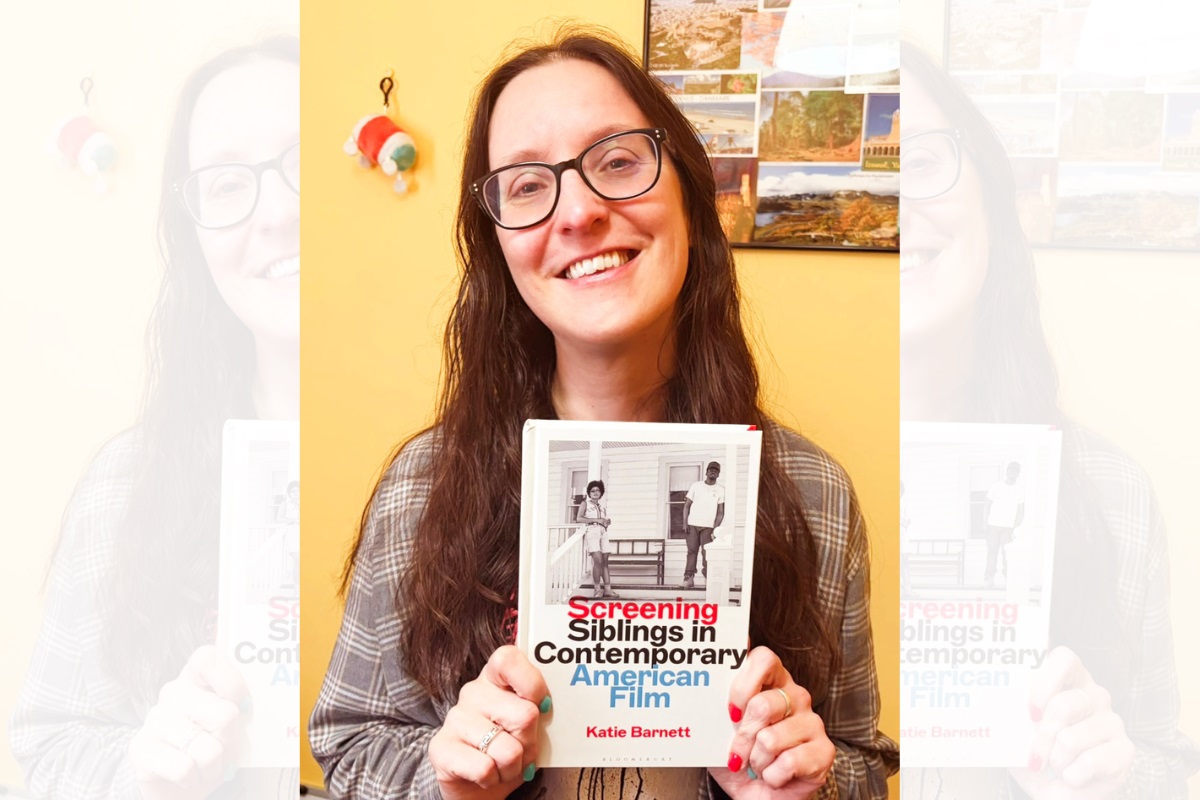
Dr Katie Barnett, senior lecturer in Film and Media Studies, has recently published her second monograph with Bloomsbury Academic, titled Screening Siblings in Contemporary American Film.
The book examines depictions of sibling relationships in American cinema from 2000 to the present, looking at everything from Hollywood blockbusters to horror films, teen movies, indie dramas and much more. It is particularly interested in why siblings are so prominent in 21st century cinema, looking at issues around power, authority, trust and shifting family demographics in the US.
Katie said: “The inspiration for the book came out of my ongoing research into representations of family in American cinema. After I finished writing my previous book, Fathers on Film: Paternity and Masculinity in 1990s Hollywood, I started thinking about other family relationships and how these appeared on screen.
“The obvious next step would be to look at mothers in film, but there is already an extensive body of work on that topic. However, hardly anyone had addressed how siblings appear on screen, even though – once you start looking for them – you realise they are everywhere in film, and for any of us who have a sibling, it is likely to be one of the longest relationships we have in our lives.
“In 2021, I ran an online conference here at Chester that featured papers from academics from Europe, the US and Asia, all focused on siblinghood in popular culture, and that was a great catalyst as it revealed just how rich the topic could be.”
Another factor in the origins of this book was recognising the relatively small amount written about siblings on screen, compared with parent-child relationships – something which Katie labelled the ‘Star Wars problem’.
Katie explained: “There is always such fascination with Luke Skywalker’s relationship with his father, Darth Vader, but much less attention is paid to the bond he has with his twin sister, Leia. In the more recent Star Wars films, however, Luke and Leia’s relationship was foregrounded more obviously, and that gave me one way in to thinking about siblings on screen.
“These ‘horizontal’ relationships offer a lot of support, recognition and solidarity, and it was interesting to me that in a time of increased online peer-to-peer connection, political upheaval, growing distrust in expertise and more expansive ideas of what ‘family’ can be, films had started reflecting an investment in these horizontal bonds, which sit apart from established vertical structures of power.”
Katie – who herself is the sister of a brother – added that while it’s more common to see dysfunctional brother-sister relationships on film or TV, there have been recent examples which have changed that, such as the Canadian series Schitt’s Creek (2016-2020), or the Jordan Peele film Nope (2022).
Katie said: “I remember going to see Nope, purely for fun, and coming out of the cinema desperate to go home and write about it – a picture of the siblings from Nope, OJ and Emerald, ended up being the front cover of this book.”
The book includes what Katie says are “very obvious choices” such as Nope, Little Women, and a lot of films in the Marvel Cinematic Universe, as well as discussions of more obscure films too.

Katie launched the book with a talk at this year’s University of Chester Festival of Ideas. She added: “I am happy to see the book out in the world, finally, and hope it will make people look at all the brothers and sisters in film a little more closely.”
For more information about the book, and to purchase a copy, visit publisher Bloomsbury.
Main image: Dr Katie Barnett with a copy of her new book, Screening Siblings in Contemporary American Film.
Image 2: Dr Katie Barnett giving a talk about her new book at Chester Picturehouse as part of the Festival of Ideas.