Our Performance
Reporting
This section will provide a transparent and accessible overview of the University’s progress in embedding sustainability across our operations, teaching, research, and partnerships.
As part of our ongoing commitment to accountability and continuous improvement, we are developing a structured approach to sustainability reporting. This space will bring together key performance data and impact narrative that demonstrate how we are contributing to environmental sustainability and the United Nations Sustainable Development Goals (SDGs).
From 2026, this section will host:
Annual Sustainability Report
Providing a comprehensive overview of our performance, including progress against targets, carbon emissions, resource use, and key sustainability initiatives across the University.
Sustainable Development Goals (SDG) Reports
Highlighting our contribution to the 17 UN SDGs through our teaching, research, operations, and partnerships, and showcasing how our work supports local, national, and global priorities.
This page will ensure our community and stakeholders can clearly understand our ambitions, actions, and progress towards a more sustainable future.
Our Progress
Some of the University’s key recent achievements include:
- Achieving Gold EcoCampus status, demonstrating strong environmental management and ongoing commitment to improvement.
- Becoming a signatory to the UKRI Concordat for the Environmental Sustainability of Research and Innovation Practice, committing to embedding sustainability considerations in research and knowledge exchange activities.
- Delivering the annual Spring into Sustainability campaign, bringing together a range of stakeholders to facilitate eco‑friendly activities for staff and students.
- Following the successful award of Public Sector Decarbonisation Scheme grant, the University started developing a £5 million three-year decarbonisation project covering two of its Chester city centre sites.
- Achieving the Bronze Carbon Literate Educator status.
- The Chaplaincy’s Community Hub garden being named finalist for the Diversity, Equity & Inclusion Green Gown Award (2025).
Environmental Management System
In addition to embedding sustainability in teaching and research, the University has a critical role in advancing sustainability through the way it manages its own operations. Our Environmental Management System (EMS) is being implemented to help us understand, manage and reduce the environmental impacts associated with our campuses and activities. By embedding environmental responsibility into everyday decision-making, the EMS supports the University’s commitment to sustainability, regulatory compliance and continual improvement.
The EMS provides a structured framework that allows us to identify key environmental aspects such as energy use, water consumption, waste generation, travel and biodiversity impacts. Through clear policies, processes and procedures, measurable objectives and regular monitoring, the system helps the University track performance and implement practical improvements across departments and facilities. This approach ensures that sustainability is not treated as a standalone initiative but is integrated into planning, procurement, operations and campus development.
Implementation of the EMS involves collaboration across the University community. Staff, students, and partners all play a role in identifying opportunities for improvement and supporting environmentally responsible practices. Training, communication and engagement activities help ensure that everyone understands how their actions contribute to the University’s environmental goals. Regular reviews and audits also help us evaluate progress and identify areas where further action is needed. From reducing carbon emissions and improving resource efficiency to supporting greener behaviours across campus, the system provides a clear pathway for continuous progress.
The University’s progress has been formally recognised through the award of Gold EcoCampus status, achieved following a rigorous independent audit of its environmental management practices. EcoCampus is a leading environmental management framework for higher education institutions and is aligned with the international standard ISO 14001. The scheme supports universities in embedding environmental sustainability across all areas of their operations through a structured, phased approach. Achieving Gold status demonstrates the University’s strong commitment to managing its environmental impacts through clear objectives, defined responsibilities and robust operational controls.
Building on this achievement, the University is continuing its journey toward Platinum EcoCampus status and full ISO 14001 certification - the highest level of recognition within the scheme. This next stage reflects our ambition to strengthen environmental governance further while creating meaningful opportunities for students and staff to participate in sustainability initiatives. These efforts also support the University’s wider strategic priorities, including the delivery of its Citizen Student strategy, empowering the University community to contribute positively to environmental and societal challenges.
Gold EcoCampus Status
The University’s progress has been formally recognised through the award of Gold EcoCampus status, achieved following a rigorous independent audit of its environmental management practices. EcoCampus is a leading environmental management framework for higher education institutions and is aligned with the international standard ISO 14001. The scheme supports universities in embedding environmental sustainability across all areas of their operations through a structured, phased approach. Achieving Gold status demonstrates the University’s strong commitment to managing its environmental impacts through clear objectives, defined responsibilities and robust operational controls.
Cheshire West Design Awards – Sustainable School of Education
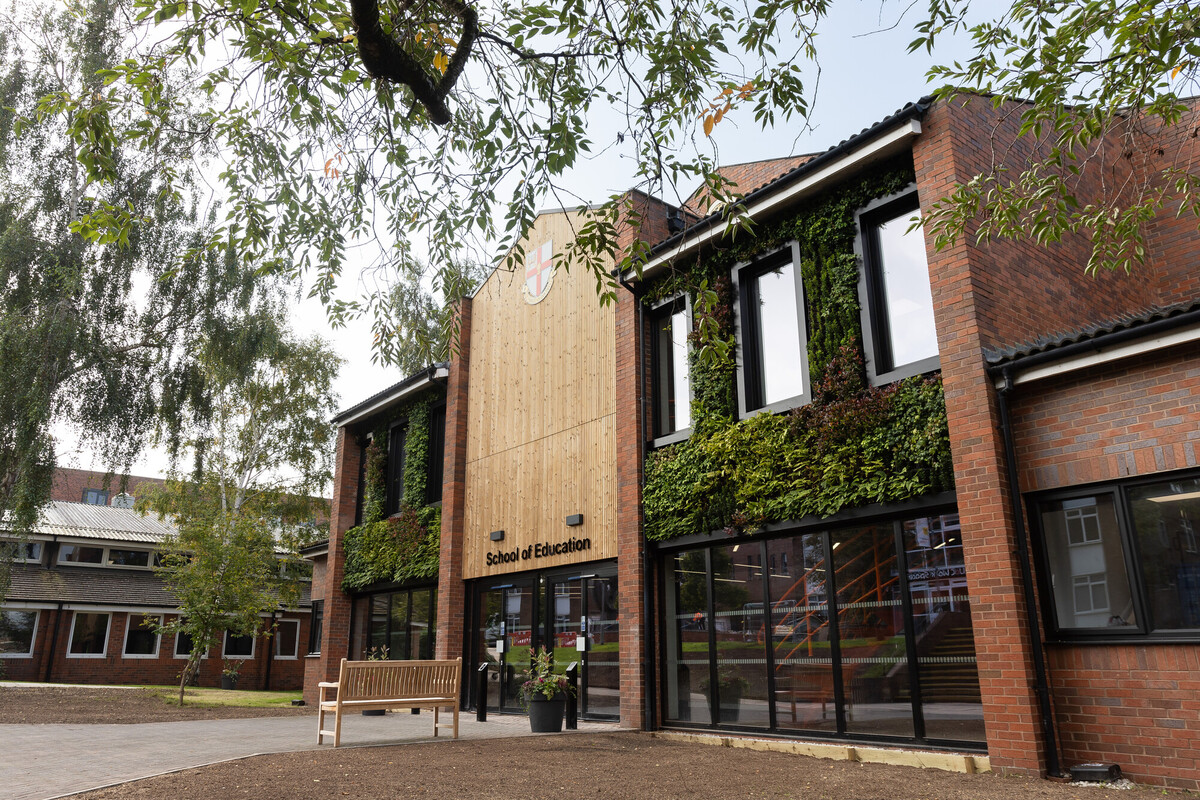
In 2025 the University’s refurbished School of Education building received a commendation for sustainable design at the Cheshire West Design Awards. Using Office for Students (OfS) funding, the University was recognised for fully refurbishing the School of Education building in an environmentally sustainable nature, including recycled furniture from other areas of the University.
SOIL Association – Food for Life Award
In 2025 the Catering team achieved the Bronze ‘Food for Life’ standard. Awarded by the Soil Association, this accreditation recognises that our Catering team provides and meets basic standards for healthy, ethical, and sustainable food at the Dining Hall.

Green Gown Awards
Established in 2004, the Green Gown Awards - run by the Environmental Association of Universities and Colleges (EAUC) - recognises the exceptional sustainability initiatives being undertaken by universities and colleges. The University of Chester have been winners, highly commended, and/or finalists for several awards:
|
Year |
Award & Title |
|
2014 |
Student Engagement (winner) – How to turn the tap off with a trashion show! |
|
2016 |
Student Champion (winner) – Karen Elliot |
|
Student Research & Development (highly commended) – Alex Lerczak |
|
|
Food & Drink (winner) - Encouraging Sustainability through Hospitality: The Chester Way |
|
|
2017 |
Carbon Reduction (highly commended) – Lights, Solar, Action! |
|
Food & Drink (highly commended) – Just the VEGANing |
|
|
Staff Champion (highly commended) – Shaunagh Smith |
|
|
2019 |
Benefitting Society (winner) – Caring Cups for the Chester Community |
|
Campus Health, Food & Drink (winner) – Doing it the Chester Way – Championing Sustainable Palm Oil |
|
|
Student Engagement (winner) – Students “Give it Some Welly” with Community Conservation Projects |
|
|
Staff Champion (winner) – Lauren Holmes |
|
|
2022 |
Campus Health, Food & Drink (winner) – Ready, Reset, Reuse, Go! |
|
2024 |
Student Champion (finalist) – Laura Tuckey |
|
2025 |
Diversity, Equity & Inclusion (finalist) – Community Hub: Cultivating Care & Belonging with a Multi-Faith Chaplaincy |
Community Hub Garden
Students and staff can also let their gardening skills bloom over time at the University's Community Hub garden. From its humble beginnings in 2022, the Community Hub garden has welcomed partnerships with faculties through placements, student societies, University teams and charities – most notably Faiths4Change - to create a welcoming, natural space.
The space continues to flourish, with volunteer and staff efforts being celebrated and recognised through different award schemes:
- Awarded: Level 5 – Outstanding' by the RHS Britain in Bloom (North West) (2026).
- Finalist: Diversity, Equity & Inclusion in Sustainability – Green Gown Awards (2025).