My Journey to Becoming a Carbon Literacy Facilitator
Kenneth Osayende Osemenkhian
My sustainability journey started back home in Nigeria during my National Youth Service. Serving as the President of the Sustainable Development Goals (SDG) Community Development Service (CDS) group exposed me to real community challenges and the importance of awareness and collective action. That experience sparked my interest in sustainability, even though at the time I did not fully realise where it would lead.
Coming to study at the University of Chester played a major role in shaping and deepening that interest. When I began my MBA, a module on Leading Ethically challenged me to think beyond profit and consider the broader responsibilities of businesses towards society and the environment.
This was reinforced during my Professional Practice module, where a session on the Triple Bottom Line: People, Planet, and Profit emphasised the importance for Level 7 students working on professional projects to consider not only financial performance but also social and environmental impact. This perspective stayed with me and began to shape how I approached my studies and my future career ambitions. To improve my knowledge in this area, I completed courses on LinkedIn Learning through my free student university access.
Discovering Carbon Literacy
Driven by curiosity and a desire to further understand how human activities contribute to climate change and what practical actions can be taken, I registered for the Carbon Literacy training organised and delivered by the University.
The training was a turning point for me. It made climate change more practical and relatable, moving beyond theory to focus on real-world action. It also influenced my professional project, encouraging me to take a more sustainability-focused approach, particularly in how organisations can drive change through awareness and behaviour change.
While completing my Carbon Literacy evidence form, I made a personal commitment to go further and train as a Carbon Literacy Facilitator.
Stepping Into the Facilitator Role
With the support of my module leader and members of the University’s sustainability team, I had the opportunity to work on and deliver a Climate change awareness and professional action presentation during an open mic session on the Professional Practice module to project students from 3 schools, 15+ courses, and various nationalities.
The aim was to:
- Help students understand climate change in a practical and accessible way.
- Show how human actions contribute to environmental challenges.
- Encourage others to see themselves as agents of change.
- Highlight the growing demand for sustainability skills across industries.
This experience pushed me out of my comfort zone and helped me develop my communication and facilitation skills. Analysing the pre-session and post-session surveys for the presentation showed improvement in climate change understanding and how we can individually contribute to reducing emissions.
Recognition and Impact
One of the most rewarding moments in this journey came when a senior lecturer who attended one of the sessions I supported shared a LinkedIn recommendation, commending my facilitation skills.
This recognition was both encouraging and affirming. It reinforced my confidence and demonstrated the value of effective communication and engagement in driving sustainability conversations.
One moment that stood out was receiving a LinkedIn recommendation from a senior lecturer who attended one of the sessions I supported, commending my facilitation skills. That recognition gave me confidence and reaffirmed my interest in this path.
Growing Through Opportunities
After completing the necessary training, I became a certified Carbon Literacy Facilitator.
Shortly after, I applied for a part-time role with the University’s Sustainability team, advertised through UniJob. I was successful at interview and offered the role, which has given me the opportunity to further develop practical skills such as communication, teamwork, and stakeholder engagement.
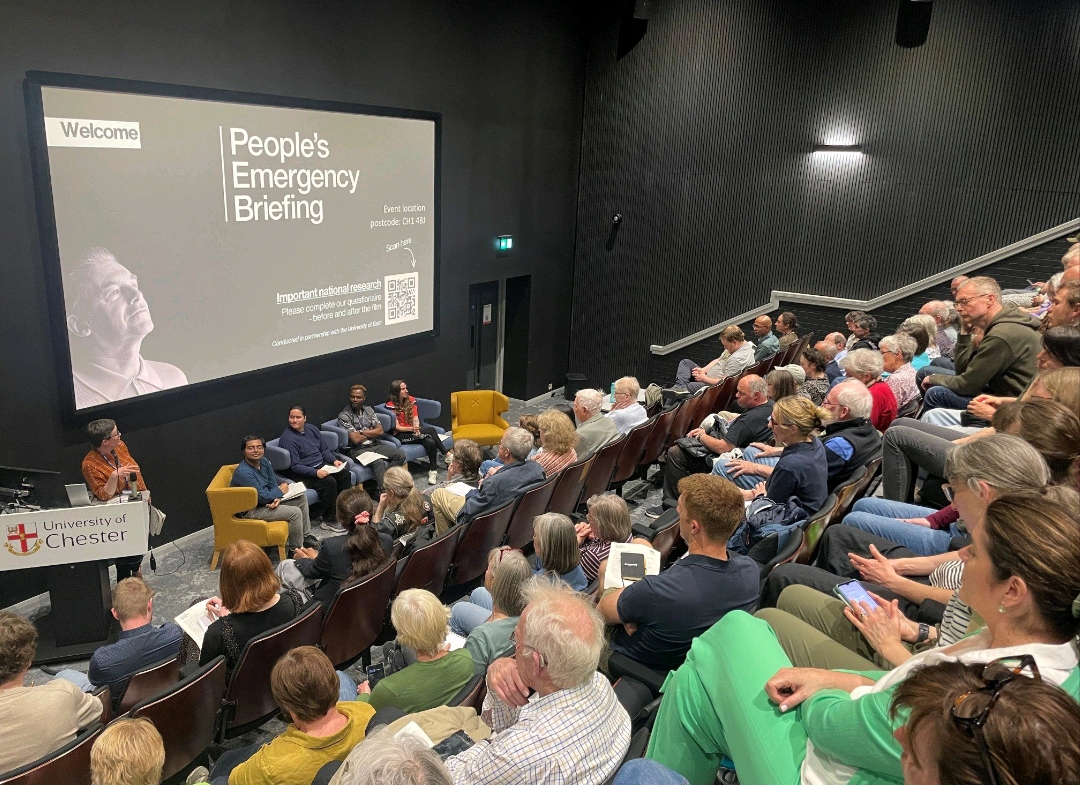
The University has also supported me with wider opportunities to grow. I participated as a panellist in the People’s Emergency Briefing hosted by the University and attended the Institute for Government and Public Policy (IGPP) event on Decarbonising the Public Sector in Manchester. These experiences have helped me understand how sustainability is being addressed across sectors and the scale of action required.
In addition, I recently registered as a student member of the Institute of Sustainability and Environmental Professionals (ISEP) as part of my commitment to continuous learning and professional development in this field.
Looking Ahead
This journey has shown me that sustainability is no longer optional; it is becoming a core requirement across all sectors. Organisations are increasingly looking for individuals who not only understand sustainability but can also contribute to driving change.
I am keen to continue building on this foundation and using my skills to support organisations in embedding sustainability into their strategies and operations.
To align with labour market demands and prepare for future opportunities, I am focusing on developing key skills in sustainability strategy and implementation, stakeholder engagement and communication, behaviour change and organisational culture, as well as policy awareness and carbon management. This includes understanding how organisations embed sustainability into decision-making, working effectively with diverse stakeholders, promoting sustainable practices, and building practical knowledge in measuring and reducing carbon footprints.
A Message to Fellow Students
If there is one thing I have learned, it is that you do not need to have everything figured out to get started.
Opportunities like Carbon Literacy training provide a great platform to develop your understanding and take practical action. They also open doors to experiences that can shape your career in unexpected and rewarding ways.
For me, what started as curiosity has grown into a clear direction, and I am grateful for the continued support from the University of Chester throughout this journey.